2026 US Treasury Bonds: Yields & Investment Opportunities
The 2026 outlook for US Treasury bonds is shaped by inflation, Federal Reserve policy, and global economic growth, influencing yields and presenting distinct investment opportunities across the fixed income spectrum.
As we approach 2026, understanding 2026 US Treasury bonds, their potential yields, and the investment opportunities they present is paramount for fixed income investors. The landscape for these foundational assets is continuously evolving, influenced by a complex interplay of economic indicators and policy decisions.
Understanding the Economic Landscape for 2026 US Treasury Bonds
The economic environment projected for 2026 will be a significant driver of US Treasury bond performance. Factors such as inflation, economic growth, and employment data will play crucial roles in shaping the Federal Reserve’s monetary policy, which in turn directly impacts bond yields. Investors need to carefully monitor these macroeconomic trends to anticipate market movements.
Inflationary Pressures and Monetary Policy
Inflation remains a central concern for bond investors. Persistent inflationary pressures could prompt the Federal Reserve to maintain a tighter monetary policy stance, potentially leading to higher bond yields. Conversely, if inflation moderates more rapidly than expected, the Fed might consider easing, which could put downward pressure on yields.
- Core Inflation: Focus on core inflation measures, excluding volatile food and energy prices, for a clearer picture of underlying price trends.
- Wage Growth: Monitor wage growth as a key indicator of demand-driven inflation and its potential impact on consumer spending.
- Federal Reserve’s Stance: Pay close attention to FOMC statements and speeches for signals on future interest rate decisions.
The delicate balance between combating inflation and supporting economic growth will define the Fed’s actions, directly influencing the attractiveness and pricing of Treasury bonds. Market participants will dissect every piece of economic data and every central bank communication for clues about the future direction of interest rates.
Global Economic Growth and Geopolitical Factors
Beyond domestic concerns, global economic growth and geopolitical developments will also exert influence. A robust global economy could lead to increased demand for riskier assets, potentially reducing the appeal of safe-haven Treasuries, while global instability could drive demand higher. Geopolitical tensions can introduce volatility, often leading to a flight to quality, benefiting US Treasuries.
The interconnectedness of global markets means that economic downturns or upturns in major economies like China or Europe can ripple through to the US bond market. Investors must adopt a global perspective when assessing the outlook for 2026 US Treasury bonds.
Analyzing Yield Movements and Their Drivers
Yield movements in the US Treasury market are a direct reflection of supply and demand, influenced by a multitude of economic, political, and market-specific factors. Understanding these drivers is essential for forecasting bond performance and making informed investment decisions for 2026.
The shape of the yield curve provides valuable insights into market expectations for future interest rates and economic growth. An inverted yield curve, for instance, has historically been a precursor to economic recessions, while a steepening curve often signals expectations of stronger economic growth and higher inflation.
Factors Influencing Treasury Yields
Several key factors will continue to influence Treasury yields into 2026. These include the Federal Reserve’s policy rate, inflation expectations, the supply of new Treasury issuance, and global demand for safe-haven assets. Each of these elements can individually or collectively shift the yield curve.
- Federal Funds Rate: The target range for the federal funds rate set by the FOMC is the most direct influence on short-term Treasury yields.
- Inflation Expectations: Higher inflation expectations generally lead to higher nominal bond yields, as investors demand greater compensation for the erosion of purchasing power.
- Treasury Supply: The volume of new Treasury debt issued by the US government to finance its expenditures can impact yields; higher supply without corresponding demand can push yields up.
- Quantitative Tightening/Easing: The Fed’s balance sheet policies, such as quantitative tightening (reducing its bond holdings), can also influence market supply and demand dynamics.
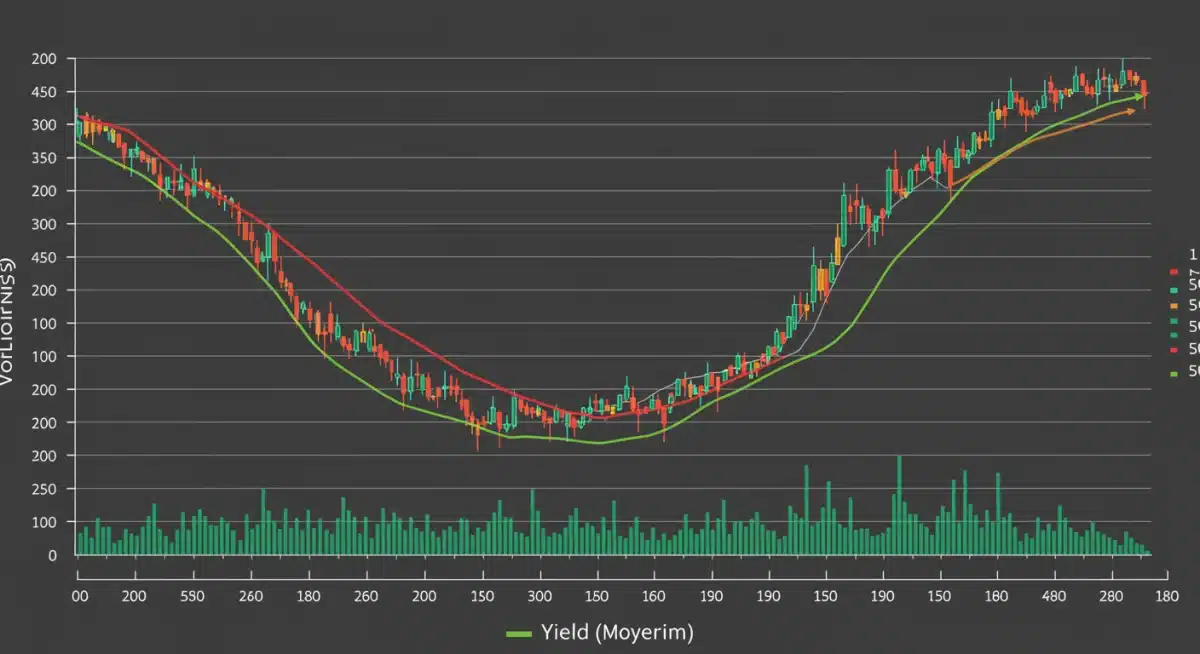
The interplay of these factors creates a dynamic environment where yield forecasts are subject to constant revision. Investors must maintain flexibility and adapt their strategies as new information becomes available. Technical analysis of bond charts and historical yield patterns can also offer additional perspectives.
Investment Opportunities in 2026 US Treasury Bonds
Despite potential volatility, 2026 US Treasury bonds will continue to offer diverse investment opportunities for fixed income portfolios. The key lies in identifying which segments of the yield curve offer the most attractive risk-adjusted returns given the prevailing economic outlook.
Short-term Treasuries, for example, typically offer lower yields but also less interest rate risk, making them suitable for investors with shorter investment horizons or those seeking liquidity. Long-term Treasuries, conversely, offer higher yields but are more sensitive to changes in interest rates.
Strategic Allocation Across the Yield Curve
Investors can strategically allocate across different maturities to optimize their fixed income portfolios. If interest rates are expected to rise, a barbell strategy focusing on short-term and long-term bonds might be considered. If rates are expected to fall, a laddering strategy across various maturities could provide a steady income stream.
- Short-Term Bonds: Ideal for capital preservation and liquidity, with less sensitivity to interest rate fluctuations.
- Intermediate-Term Bonds: Offer a balance between yield and interest rate risk, suitable for a moderate investment horizon.
- Long-Term Bonds: Provide higher yields but come with greater interest rate risk, best suited for investors with a long-term perspective willing to weather potential volatility.
Furthermore, investors might consider Treasury Inflation-Protected Securities (TIPS) if inflation concerns persist. TIPS adjust their principal value based on changes in the Consumer Price Index, offering protection against inflation erosion. This can be a valuable component of a diversified fixed income portfolio in an inflationary environment.
Assessing Risks and Mitigating Strategies
Investing in 2026 US Treasury bonds, while generally considered safe, is not without risks. Interest rate risk, inflation risk, and liquidity risk are among the primary concerns that investors must assess and actively manage to protect their portfolios.
Understanding these risks is the first step towards developing effective mitigation strategies. A proactive approach to risk management can help preserve capital and ensure that investment objectives are met, even in challenging market conditions.
Key Risks for Treasury Bond Investors
Interest rate risk is perhaps the most significant risk for bondholders. As interest rates rise, the market value of existing bonds with lower coupon rates typically falls. Inflation risk erodes the purchasing power of future bond payments, particularly for traditional fixed-rate bonds.
- Interest Rate Risk: The risk that bond prices will fall as interest rates rise. Bonds with longer maturities are more susceptible to this risk.
- Inflation Risk: The risk that inflation will erode the real return on a bond, especially for bonds with fixed coupon payments.
- Reinvestment Risk: The risk that future coupon payments or principal repayments will have to be reinvested at a lower interest rate, reducing overall returns.
While US Treasuries are considered to have virtually no credit risk (the risk of default by the issuer), other risks still need careful consideration. Diversification within the fixed income portfolio, including different types of bonds and maturities, can help spread risk.
Mitigation Strategies for Fixed Income Portfolios
To mitigate these risks, investors can employ various strategies. Duration management, for instance, involves adjusting the portfolio’s sensitivity to interest rate changes. Reducing portfolio duration when rates are expected to rise, or increasing it when rates are expected to fall, can help manage interest rate risk.
For inflation risk, TIPS offer a direct hedge. Diversifying into other asset classes, such as equities or real estate, can also provide a buffer against inflation. Maintaining a balanced portfolio that aligns with one’s risk tolerance and investment horizon is always a prudent approach.
The Role of US Treasuries in Diversified Portfolios
Even with evolving market dynamics, 2026 US Treasury bonds will continue to serve as a cornerstone for diversified investment portfolios. Their role as a safe-haven asset and a source of stability is particularly valuable during periods of market uncertainty or economic downturns.
Treasuries often exhibit a low correlation with other asset classes, such as equities, meaning they tend to perform differently under various market conditions. This characteristic makes them effective tools for reducing overall portfolio volatility and enhancing risk-adjusted returns.
Treasuries as a Safe-Haven Asset
During times of economic stress or geopolitical turmoil, investors typically flock to US Treasuries, driving up their prices and pushing down yields. This flight to quality underscores their enduring appeal as a safe-haven asset, providing a measure of protection when other investments are under pressure.
For conservative investors, a significant allocation to Treasuries can help preserve capital and provide a reliable income stream. For more aggressive investors, Treasuries can serve as a ballast, cushioning the portfolio against sharp declines in riskier assets.
Forecasting the Future: Key Considerations for 2026
Forecasting the trajectory of 2026 US Treasury bonds requires a nuanced understanding of several interconnected economic and political forces. While absolute certainty is impossible, focusing on key indicators and potential scenarios can help investors prepare for the future.
The interaction between fiscal policy (government spending and taxation) and monetary policy (Federal Reserve actions) will be particularly critical. Any divergence or alignment between these two policy arms can significantly alter the bond market outlook.
Potential Scenarios for 2026
Several scenarios could unfold by 2026, each with different implications for Treasury yields. A scenario of sustained economic growth with moderating inflation might lead to stable or gradually rising yields. Conversely, an economic slowdown coupled with persistent inflation (stagflation) could create a more challenging environment for bond investors.
- Strong Growth, Moderate Inflation: This scenario could see yields hold steady or rise modestly as the Fed maintains a balanced approach.
- Economic Slowdown, Disinflation: In this case, lower growth and falling inflation could lead to declining yields, making existing bonds more valuable.
- Persistent Inflation, Weak Growth (Stagflation): This challenging scenario could result in volatile yields, with the Fed potentially tightening into a weakening economy.
Technological advancements, demographic shifts, and global trade dynamics will also play a role in shaping the long-term economic outlook and, by extension, the bond market. Investors should consider these broader trends in their long-range planning.
| Key Point | Brief Description |
|---|---|
| Economic Drivers | Inflation, Fed policy, and global growth are crucial for 2026 US Treasury yields. |
| Yield Curve Analysis | Understanding the yield curve helps identify future interest rate and economic growth expectations. |
| Investment Strategies | Strategic allocation across maturities (short, intermediate, long) and TIPS for inflation protection. |
| Risk Management | Addressing interest rate and inflation risks through diversification and duration management. |
Frequently Asked Questions About 2026 US Treasury Bonds
Persistent high inflation in 2026 could lead the Federal Reserve to maintain higher interest rates, pushing up Treasury yields. Conversely, if inflation moderates, the Fed might ease policy, potentially lowering yields. Investors should monitor CPI data closely.
The Federal Reserve’s monetary policy, particularly its decisions on the federal funds rate and balance sheet management (quantitative tightening/easing), will be a primary driver of 2026 US Treasury bond yields. Their actions will dictate short-term rate expectations.
Yes, US Treasury bonds are generally considered among the safest investments globally due to the full faith and credit backing of the US government. While they carry interest rate and inflation risk, default risk is virtually nonexistent, making them a safe haven.
Opportunities depend on the economic outlook. If inflation persists, TIPS could be attractive. If rates are expected to fall, longer-duration bonds might offer capital appreciation. Strategic allocation across the yield curve based on market forecasts is key.
Mitigation strategies include duration management to control interest rate sensitivity, investing in TIPS to hedge inflation, and diversifying across different bond types and maturities. A well-diversified portfolio helps cushion against market volatility.
Conclusion
The 2026 US Treasury bonds market promises to be dynamic, shaped by ongoing economic shifts, Federal Reserve policies, and global influences. Navigating this landscape effectively requires a deep understanding of yield drivers, strategic investment planning, and robust risk management. By carefully analyzing inflation trends, monetary policy signals, and global economic health, investors can identify valuable opportunities within fixed income portfolios, ensuring stability and potential growth in an evolving market environment.