Understanding the Latest Inflation Data: How a 3.2% CPI Affects Your Purchasing Power Today
Anúncios
The economic landscape is a constantly shifting terrain, and few metrics capture its dynamic nature as profoundly as the Consumer Price Index (CPI). Recently, the announcement of a 3.2% CPI inflation rate has sent ripples through households, businesses, and financial markets alike. This seemingly small percentage point increase carries significant weight, influencing everything from the cost of your morning coffee to the long-term value of your savings. Understanding what this 3.2% CPI inflation means for your purchasing power and the broader economy is not just an academic exercise; it’s a vital step in navigating your financial future.
Anúncios
In this comprehensive guide, we will dissect the latest inflation data, explore its underlying causes, and, most importantly, provide actionable insights into how this 3.2% CPI inflation impacts your daily life and financial decisions. From the grocery store to your investment portfolio, inflation’s reach is extensive. We’ll delve into the specifics, offering a clear picture of what to expect and how to adapt.
What is the Consumer Price Index (CPI)? Unpacking the 3.2% Figure
Before we can fully grasp the implications of a 3.2% CPI inflation rate, it’s essential to understand what the CPI actually represents. The Consumer Price Index is a measure that examines the weighted average of prices of a basket of consumer goods and services, such as transportation, food, and medical care. It is calculated by taking price changes for each item in the predetermined basket of goods and averaging them. Changes in the CPI are used to assess price changes associated with the cost of living.
How CPI is Calculated and Its Significance
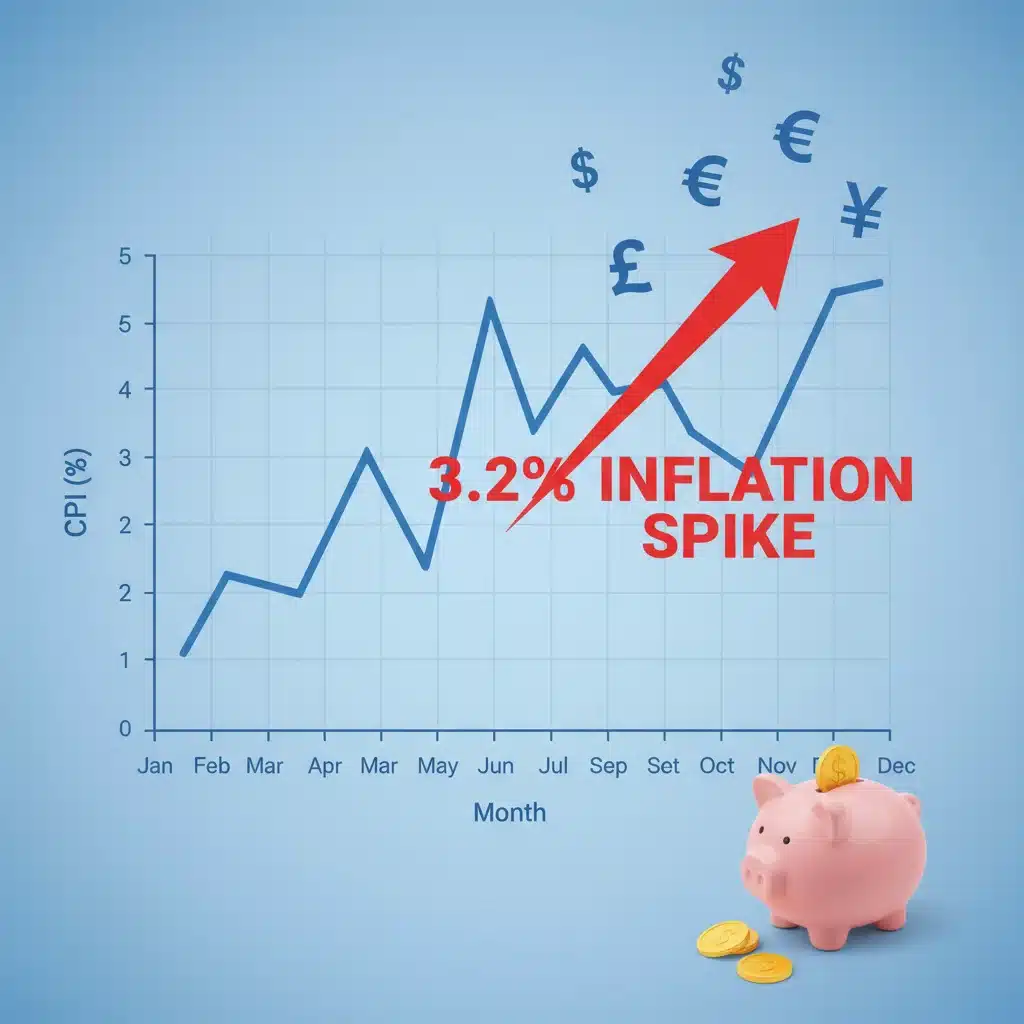
The U.S. Bureau of Labor Statistics (BLS) collects price data on thousands of items across various categories to compute the CPI. This data is then weighted based on the average household’s spending patterns. For example, housing and food typically have higher weights because they constitute a larger portion of most household budgets. When we hear about a 3.2% CPI inflation, it means that, on average, the prices of this basket of goods and services have increased by 3.2% over a specific period, usually the last 12 months.
Distinguishing Headline CPI from Core CPI
It’s also crucial to differentiate between ‘headline CPI’ and ‘core CPI.’ Headline CPI, which is what the 3.2% CPI inflation figure typically refers to, includes all goods and services. Core CPI, on the other hand, excludes volatile items like food and energy prices. While headline CPI provides a broader view of inflation, core CPI is often favored by economists and policymakers for its ability to reveal underlying inflationary trends, as it strips out short-term fluctuations caused by supply shocks in food and energy markets. Both metrics are important, but the 3.2% figure gives us a comprehensive look at the overall cost of living.
The Drivers Behind the 3.2% CPI Inflation
Inflation is rarely the result of a single factor; it’s usually a complex interplay of various economic forces. The recent 3.2% CPI inflation rate is likely influenced by a combination of demand-side pressures, supply-chain disruptions, and geopolitical events. Understanding these drivers is key to anticipating future economic trends and making informed financial decisions.
Demand-Side Pressures: Strong Consumer Spending and Wage Growth
One significant contributor to inflation is robust consumer demand. When consumers have more disposable income or feel confident about the economy, they tend to spend more. This increased demand, if not met by an equivalent increase in supply, can push prices upwards. Wage growth, while beneficial for workers, can also contribute to inflationary pressures if it outpaces productivity gains, leading businesses to raise prices to cover higher labor costs. Post-pandemic pent-up demand and government stimulus measures have played a role in fueling this spending spree, contributing to the 3.2% CPI inflation we see today.
Supply-Side Constraints: Global Supply Chains and Energy Costs
On the supply side, persistent disruptions in global supply chains continue to exert upward pressure on prices. From semiconductor shortages impacting car production to logistical bottlenecks affecting shipping, these issues make it more expensive and time-consuming for businesses to produce and deliver goods. Energy costs, particularly oil and natural gas, are another major factor. Fluctuations in global energy markets can quickly translate into higher transportation costs for businesses and higher utility bills for consumers, directly feeding into the 3.2% CPI inflation figure.
Geopolitical Factors and Their Impact
Geopolitical events, such as international conflicts or trade disputes, can also have a profound impact on inflation. These events can disrupt the supply of critical commodities, lead to tariffs, or create uncertainty that affects investment and production decisions. The ongoing global instability has undoubtedly contributed to the current inflationary environment, adding another layer of complexity to the 3.2% CPI inflation rate.
How 3.2% CPI Inflation Erodes Your Purchasing Power
The most direct and tangible effect of 3.2% CPI inflation is the erosion of purchasing power. In simple terms, your money buys less today than it did yesterday. This is not just an abstract economic concept; it has concrete implications for your daily expenses, savings, and overall financial well-being.
Impact on Everyday Expenses: Groceries, Gas, and Housing
Consider your weekly grocery bill. With a 3.2% CPI inflation rate, the same basket of goods that cost you $100 last year now costs $103.20. While this might seem like a small increase individually, over time and across all your expenses, it adds up significantly. Food prices, energy costs (gasoline, electricity, heating), and housing costs (rent or mortgage payments) are often the most noticeable areas where inflation bites. Families might find themselves making difficult choices, cutting back on certain items, or seeking cheaper alternatives to stretch their budgets further.

The Silent Tax: Effect on Savings and Fixed Incomes
Inflation is often referred to as a ‘silent tax’ because it reduces the real value of your money without any explicit tax being levied. If your savings account is yielding less than 3.2% interest, then the real value of your savings is actually decreasing. For individuals on fixed incomes, such as retirees relying on pensions or social security, the impact can be particularly severe. Their income remains stagnant, while the cost of living continues to rise, leading to a noticeable decline in their standard of living. This highlights the importance of understanding the 3.2% CPI inflation rate and its long-term effects on financial planning.
Borrowing Costs and Interest Rates
Central banks often respond to persistent inflation by raising interest rates. Higher interest rates make borrowing more expensive for consumers and businesses, which can dampen demand and help to bring inflation under control. However, this also means that the cost of mortgages, car loans, and credit card debt can increase, adding another layer of financial pressure. The prospect of higher interest rates in response to the 3.2% CPI inflation rate is a key consideration for anyone planning to borrow money or refinance existing loans.
Strategies to Mitigate the Impact of 3.2% CPI Inflation
While inflation is an economic reality, there are proactive steps you can take to protect your purchasing power and financial well-being. Adapting your financial strategies in response to the 3.2% CPI inflation rate is crucial for maintaining stability and achieving your long-term goals.
Budgeting and Expense Tracking: Identifying Areas for Savings
The first step in combating inflation’s effects is to gain a clear understanding of where your money is going. Thorough budgeting and expense tracking can help you identify areas where you can cut back or optimize spending. This might involve reducing discretionary expenses, seeking out more affordable alternatives for common purchases, or negotiating better deals on services. Even small adjustments can make a difference when facing a 3.2% CPI inflation environment.
Smart Investing: Protecting Your Capital from Inflation
Investing wisely is paramount during inflationary periods. Traditional savings accounts may not offer sufficient returns to outpace the 3.2% CPI inflation. Consider investments that historically perform well during inflation, such as Treasury Inflation-Protected Securities (TIPS), real estate, commodities, or dividend-paying stocks. Diversifying your portfolio across various asset classes can also help to hedge against inflationary risks. Consulting with a financial advisor can provide personalized guidance tailored to your specific financial situation and risk tolerance.
Income Generation: Seeking Opportunities for Growth
Increasing your income is another effective way to combat the erosion of purchasing power. This could involve seeking a raise at your current job, exploring opportunities for professional development to enhance your earning potential, or even starting a side hustle. In a climate of 3.2% CPI inflation, ensuring your income keeps pace with or exceeds the rate of inflation is vital for maintaining your financial standing.
The Federal Reserve’s Response to 3.2% CPI Inflation
Central banks, particularly the Federal Reserve in the U.S., play a critical role in managing inflation. Their primary tool is monetary policy, and their actions can significantly influence the trajectory of the economy. The 3.2% CPI inflation rate will undoubtedly be a central focus of their policy decisions.
Interest Rate Hikes and Quantitative Tightening
To combat inflation, central banks typically raise benchmark interest rates. Higher rates make it more expensive for banks to borrow from the Fed, which translates into higher lending rates for consumers and businesses. This reduces demand, cooling down the economy and, in theory, bringing inflation under control. The Federal Reserve may also engage in quantitative tightening, which involves reducing its balance sheet by selling off assets, further pulling money out of the financial system. These actions are carefully calibrated to address the 3.2% CPI inflation without triggering a recession.
Balancing Inflation Control with Economic Growth
The challenge for the Federal Reserve is to strike a delicate balance between controlling inflation and sustaining economic growth. Aggressive rate hikes, while effective in taming inflation, can also slow down economic activity, potentially leading to job losses and a recession. Conversely, being too slow to act can allow inflation to become entrenched, making it even harder to control later. The 3.2% CPI inflation figure presents a complex scenario for policymakers, requiring careful consideration of various economic indicators and potential outcomes.
Long-Term Outlook: What to Expect Beyond 3.2% CPI Inflation
While the current 3.2% CPI inflation rate is a immediate concern, it’s also important to consider the long-term outlook. Economic forecasts are inherently uncertain, but understanding the potential future scenarios can help you prepare and adjust your strategies accordingly.
Potential Scenarios: Persistent Inflation vs. Disinflation
One possible scenario is that inflation remains elevated for an extended period, perhaps hovering around or slightly above the current 3.2% CPI inflation rate. This could be driven by continued supply-side issues, strong wage growth, or persistent geopolitical instability. Another scenario is disinflation, where the rate of inflation slows down, gradually returning to the Federal Reserve’s target of around 2%. This could be achieved through effective monetary policy, a resolution of supply-chain issues, or a cooling of consumer demand. The likelihood of each scenario depends on a multitude of evolving factors.
The Role of Global Economic Trends
The U.S. economy does not operate in isolation. Global economic trends, including growth in other major economies, international trade relations, and commodity prices, will all play a significant role in shaping future inflation. For instance, a slowdown in global growth could reduce demand for goods and services, easing inflationary pressures. Conversely, a resurgence in global demand could reignite them. The interconnectedness of the global economy means that the 3.2% CPI inflation rate in the U.S. is part of a larger worldwide narrative.
Adapting Your Financial Plan for the Future
Regardless of the specific long-term trajectory, the key takeaway is the importance of adaptability in your financial planning. Regularly review your budget, investment portfolio, and income streams to ensure they are aligned with the prevailing economic conditions. Staying informed about economic data, central bank policies, and global trends will empower you to make timely adjustments and protect your financial future against the ongoing impact of inflation, whether it remains at 3.2% CPI inflation or shifts in either direction.
Conclusion: Navigating the Economic Realities of 3.2% CPI Inflation
The announcement of a 3.2% CPI inflation rate serves as a critical reminder of the dynamic nature of our economy and the constant need for vigilance in managing our personal finances. This figure is not merely a statistic; it represents a tangible shift in the cost of living, impacting everything from your daily expenditures to your long-term financial security. We’ve explored the intricate mechanisms behind the CPI, the multifaceted drivers pushing inflation higher, and the very real consequences for your purchasing power.
From the increasing cost of groceries and fuel to the silent erosion of savings and the rising expense of borrowing, the effects of 3.2% CPI inflation are pervasive. However, understanding these challenges is the first step toward overcoming them. By implementing prudent budgeting practices, making informed investment decisions that account for inflationary pressures, and actively seeking opportunities to grow your income, you can build resilience into your financial plan.
Furthermore, recognizing the role of central bank policies and broader global economic trends allows for a more holistic approach to financial preparedness. The Federal Reserve’s delicate balancing act to control inflation without stifling economic growth will continue to shape the financial landscape, and staying informed about their actions is paramount. While the future trajectory of inflation remains uncertain, a proactive and adaptable financial strategy is your strongest defense.
In conclusion, the 3.2% CPI inflation rate demands our attention and strategic response. It’s an opportunity to reassess, re-evaluate, and refine our financial habits to ensure that our hard-earned money continues to work for us, even in an environment of rising prices. By empowering ourselves with knowledge and taking deliberate action, we can navigate these economic realities with greater confidence and secure a more stable financial future.
Additional Resources for Understanding Inflation:
- U.S. Bureau of Labor Statistics – Consumer Price Index
- The Federal Reserve Board
- Investopedia – Inflation Explained