2025 Teacher Shortage: Data, Trends & Recruitment Solutions

Anúncios
The 2025 teacher shortage is a critical issue impacting educational quality across the United States, driven by complex factors requiring comprehensive data-driven solutions for recruitment and retention.
Anúncios
The looming crisis of the 2025 teacher shortage presents a profound challenge to the fabric of American education. This isn’t merely a localized issue but a national trend, threatening to undermine student success and the quality of learning environments across the country. Understanding the intricate dynamics at play, from declining enrollment in teacher preparation programs to increased attrition rates, is crucial for developing effective strategies. This article delves into a data-driven analysis of these trends, exploring the root causes and proposing actionable recruitment solutions to safeguard the future of our educational system.
The Current Landscape: A Looming Crisis
The educational sector in the United States is facing an unprecedented staffing challenge that is projected to intensify significantly by 2025. This isn’t just about a few vacant positions; it represents a systemic issue threatening the foundational quality of public education. The confluence of several factors, including an aging workforce, declining interest in the profession, and increasing student populations, is creating a perfect storm.
Understanding the full scope of this impending crisis requires a close look at the data. Reports from various educational organizations consistently highlight a growing gap between the supply of qualified educators and the demand from schools. This gap is not uniform across all subjects or geographic areas, with certain fields like special education, science, technology, engineering, and mathematics (STEM), and bilingual education facing particularly acute shortages. Rural and low-income urban districts are often hit the hardest, exacerbating existing educational inequities.
Decline in Teacher Preparation Enrollment
A significant indicator of the deepening teacher shortage is the steady decline in enrollment in teacher preparation programs nationwide. Universities and colleges are reporting fewer students choosing education as a major, a trend that has been observed for over a decade. This reduction in the pipeline of new educators directly impacts the ability of schools to fill vacancies as experienced teachers retire or leave the profession.
- Between 2010 and 2018, enrollment in teacher preparation programs dropped by approximately one-third.
- Fewer graduates mean fewer new teachers entering the workforce annually.
- The perception of teaching as a less attractive career option contributes to this decline.
The implications of this decline are far-reaching. It suggests a fundamental shift in how the teaching profession is viewed by prospective candidates, often linked to concerns about compensation, working conditions, and professional respect. Addressing this underlying perception is critical for any long-term solution.
High Teacher Attrition Rates
Beyond the struggle to attract new talent, the education system also grapples with high rates of teacher attrition. Many educators, particularly those in their early career stages, are leaving the profession within their first five years. This ‘revolving door’ phenomenon places immense strain on school districts, forcing them into continuous recruitment cycles and often leading to less experienced staff in classrooms.
The reasons for attrition are complex and varied, ranging from inadequate support and heavy workloads to insufficient pay and challenging classroom environments. These factors collectively contribute to burnout and a sense of disillusionment among educators. A sustainable solution must not only focus on bringing new teachers into the fold but also on creating conditions that encourage seasoned professionals to stay.
In conclusion, the current landscape points to a severe and multifaceted teacher shortage that demands immediate and strategic intervention. The decline in new entrants combined with the exodus of experienced professionals creates a critical void that will impact student learning and academic achievement for years to come if left unaddressed. Data clearly indicates that without significant changes, the 2025 teacher shortage will become an even more entrenched problem.
Data-Driven Analysis of National Trends
A deeper dive into the numbers reveals more than just a general shortage; it highlights specific areas of vulnerability and identifies key demographic shifts impacting the teaching profession. National trends indicate that the shortage is not evenly distributed, making targeted interventions essential. This data-driven approach allows policymakers and school administrators to allocate resources more effectively and develop strategies that address the most pressing needs.
Examining regional differences, for instance, shows that states with rapidly growing populations or those with historically lower teacher salaries often experience more severe shortages. Furthermore, certain subject areas consistently struggle to find qualified candidates, suggesting that specialized recruitment efforts are necessary in those fields.
Geographic and Subject-Specific Shortages
The national data consistently points to significant disparities in teacher availability across different regions and subject areas. Rural districts frequently face immense challenges due to their remote locations, often struggling to attract and retain teachers who may prefer urban or suburban environments. These districts may also have fewer resources to offer competitive salaries or professional development opportunities.
- Rural areas often struggle with a lack of housing and limited social amenities for teachers.
- Urban areas with high poverty rates also experience significant shortages due to challenging working conditions.
- Special education, STEM fields (science, technology, engineering, and math), and foreign languages are consistently identified as high-need subjects.
This geographic and subject-specific analysis underscores the need for tailored recruitment and retention programs. A one-size-fits-all approach will likely fail to address the nuanced challenges faced by diverse school districts across the country.
Demographic Shifts and Teacher Diversity
Another critical aspect of the data reveals a growing disconnect between the demographics of the student population and the teaching workforce. As student bodies become increasingly diverse, the teaching profession largely remains predominantly white. This lack of diversity among educators has implications for student engagement, cultural understanding, and the ability of schools to serve all learners effectively.
Data shows that students benefit from having teachers who share their racial and ethnic backgrounds, leading to improved academic outcomes and stronger connections to school. The current demographic trends indicate a widening gap, suggesting that recruitment efforts must also prioritize increasing the diversity of the teaching pipeline. This involves actively seeking out and supporting candidates from underrepresented groups.
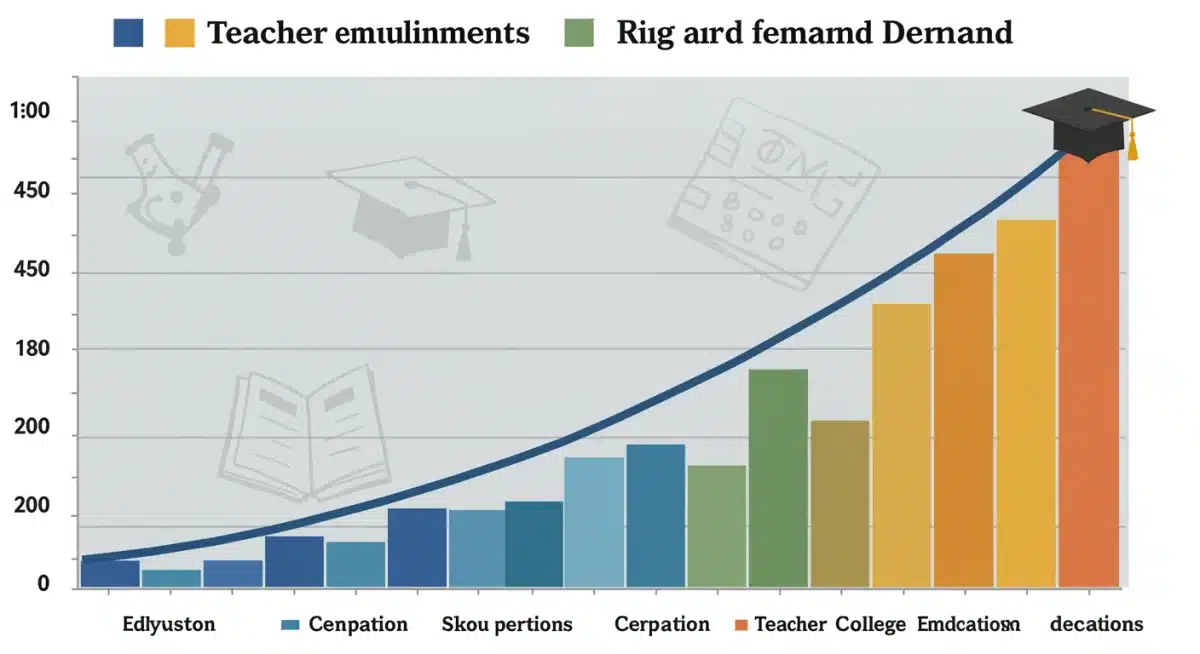
The data clearly illustrates that the 2025 teacher shortage is not a monolithic problem. It is a complex issue driven by specific geographic, subject-matter, and demographic factors. A thorough data-driven analysis is the first step towards crafting effective, targeted interventions that can truly make a difference in addressing this critical educational challenge.
Impact on Educational Quality and Student Outcomes
The ramifications of a widespread teacher shortage extend far beyond administrative inconvenience; they directly impinge upon the quality of education students receive and, consequently, their long-term academic and life outcomes. When schools struggle to find qualified educators, they are forced to make difficult compromises that can negatively affect the learning environment. This compromises the very foundation of educational excellence.
Consistently understaffed schools often resort to hiring less qualified individuals, increasing class sizes, or even canceling courses, especially in specialized subjects. Each of these measures has a direct, measurable impact on student learning and overall school effectiveness. The cumulative effect of these challenges can lead to a decline in educational standards across the board.
Larger Class Sizes and Reduced Individual Attention
One of the most immediate and visible consequences of fewer teachers is the inevitable increase in class sizes. When there aren’t enough educators to go around, existing teachers are often assigned more students to ensure all classes are covered. While seemingly a practical solution, larger class sizes significantly dilute the quality of instruction and the amount of individual attention each student receives.
- Teachers in larger classes have less time for one-on-one interactions with students.
- It becomes more challenging to identify and address individual learning needs.
- Student engagement and participation can decrease in crowded classrooms.
Research consistently shows that smaller class sizes are linked to improved academic performance, particularly for younger students and those from disadvantaged backgrounds. The trend towards larger classes due to teacher shortages directly undermines these benefits, potentially widening achievement gaps.
Impact on Curriculum and Specialized Subjects
The teacher shortage also has a profound effect on the breadth and depth of the curriculum schools can offer. When there’s a scarcity of qualified teachers in specific areas, such as advanced sciences, foreign languages, or arts, schools may be forced to limit or even eliminate these programs. This deprives students of valuable educational opportunities and can narrow their pathways to higher education and future careers.
For example, a lack of physics teachers can mean fewer students taking advanced science courses, potentially limiting their interest in STEM fields. Similarly, the absence of bilingual educators can hinder the academic progress of English language learners. The long-term implications of a restricted curriculum are significant, affecting student preparedness for a competitive global economy.
In conclusion, the 2025 teacher shortage poses a severe threat to educational quality and student outcomes. The ripple effects of inadequate staffing, from larger class sizes to a diminished curriculum, will be felt by generations of students. Addressing this shortage is not just about filling positions; it’s about preserving the integrity and effectiveness of our entire educational system.
Five Solutions for Teacher Recruitment
Addressing the pressing issue of the 2025 teacher shortage requires a multifaceted approach focused on both attracting new talent and retaining existing educators. There is no single magic bullet, but a combination of strategic interventions can significantly mitigate the crisis. These solutions must be comprehensive, addressing the root causes of the shortage rather than merely patching over symptoms.
Effective recruitment strategies need to consider the diverse motivations and challenges faced by prospective and current teachers. This includes financial incentives, professional development opportunities, and creating supportive work environments. By focusing on these key areas, schools and policymakers can begin to rebuild and strengthen the teaching pipeline.
1. Enhancing Teacher Compensation and Benefits
One of the most frequently cited reasons for individuals avoiding or leaving the teaching profession is inadequate compensation. While passion for education is a powerful motivator, it often struggles against the practical realities of financial stability. Increasing teacher salaries and improving benefits packages can make the profession significantly more attractive and competitive with other fields requiring similar levels of education.
- Competitive salaries help attract high-quality candidates and reduce financial stress.
- Improved health insurance, retirement plans, and paid leave enhance job security and satisfaction.
- Performance-based incentives or bonuses can reward excellence and encourage retention.
Beyond base salaries, offering attractive benefits such as affordable housing initiatives or tuition reimbursement for advanced degrees can further sweeten the deal, particularly in high-cost-of-living areas or for those looking to further their education. Financial stability is a powerful tool for recruitment and retention.
2. Streamlining Teacher Certification Pathways
The process of becoming a certified teacher can often be complex, time-consuming, and costly, acting as a barrier for many potential educators. Streamlining certification pathways, particularly for career changers or individuals with expertise in high-need subjects, can open up new avenues for recruitment without compromising quality.
Alternative certification programs, for example, allow individuals with bachelor’s degrees in other fields to transition into teaching more efficiently, often while gaining classroom experience. States can also review and modernize their certification requirements to ensure they are relevant and accessible, focusing on practical skills and pedagogical knowledge.
3. Providing Robust Mentorship and Support Programs
New teachers, especially those entering challenging environments, often feel overwhelmed and unsupported, contributing to high attrition rates in their early years. Establishing robust mentorship programs that pair new educators with experienced mentors can provide invaluable guidance, support, and a sense of community. This helps new teachers navigate the complexities of the classroom and the school system.
Beyond mentorship, ongoing professional development that is relevant and accessible can boost teacher confidence and effectiveness. Creating a supportive school culture where collaboration is encouraged and teachers feel valued is paramount. Emotional and professional support networks are crucial for retaining talent.
4. Improving Working Conditions and Reducing Workload
The daily working conditions for teachers often involve significant stress, heavy workloads, and a lack of autonomy. Addressing these issues by providing adequate resources, reducing administrative burdens, and fostering a positive school culture can significantly improve job satisfaction and reduce burnout. This is about creating an environment where teachers can focus on teaching rather than being bogged down by non-instructional tasks.
- Adequate classroom resources and technology support effective instruction.
- Reducing non-teaching duties allows educators more time for lesson planning and student interaction.
- Promoting teacher voice in school decision-making can enhance feelings of respect and ownership.
Flexible scheduling options, such as compressed workweeks or opportunities for remote professional development, could also contribute to a better work-life balance, making the profession more appealing. A supportive and efficient working environment is a powerful retention tool.
5. Targeted Recruitment Campaigns and Diversity Initiatives
To address specific shortages in subjects or geographic areas, and to increase teacher diversity, targeted recruitment campaigns are essential. This involves actively seeking out candidates from underrepresented backgrounds and promoting teaching as a viable and rewarding career path to a wider audience. Partnerships with community organizations and historically Black colleges and universities (HBCUs) can be particularly effective.
Scholarships and loan forgiveness programs specifically for those entering high-need fields or committing to teach in underserved areas can incentivize individuals to pursue these paths. Showcasing the positive impact of teaching and the opportunities for professional growth can also help shift public perception and attract a new generation of educators. These campaigns need to be strategic, highlighting the unique benefits and contributions of teaching.
In summary, a comprehensive strategy to combat the 2025 teacher shortage must integrate financial incentives, streamlined pathways, robust support systems, improved working conditions, and targeted recruitment efforts. By tackling these issues concurrently, the education system can build a more resilient and diverse teaching workforce, ensuring quality education for all students.
The Role of Policy and Funding
Effective solutions to the teacher shortage cannot solely rely on individual school district efforts; they require significant support and strategic direction from state and federal policies, coupled with appropriate funding. Policy decisions can create the framework for sustainable change, while adequate funding provides the necessary resources to implement these changes effectively. Without a concerted effort from legislative bodies, many proposed solutions will remain aspirational.
Government policies can influence everything from teacher preparation standards to salary schedules and professional development requirements. Therefore, advocating for policies that prioritize education and support educators is a critical component of addressing the ongoing crisis. This systemic approach is essential for long-term success.
State and Federal Initiatives for Teacher Support
Both state and federal governments have a crucial role in developing and implementing initiatives that support teachers and the teaching profession. This can include funding for scholarships, loan forgiveness programs, and grants for professional development. Such initiatives directly address financial barriers and enhance the professional growth opportunities available to educators.
- Federal grants can support alternative certification programs targeting high-need areas.
- State funds can be allocated to increase base teacher salaries and benefits.
- Policy changes can reduce bureaucratic hurdles for out-of-state teachers seeking certification.
Moreover, policies can be enacted to promote positive working conditions, such as mandating reasonable class sizes or providing resources for mental health support for teachers. These policies create a more appealing and sustainable career path for current and prospective educators.
Long-Term Investment in Education Infrastructure
Beyond immediate recruitment and retention efforts, addressing the 2025 teacher shortage also requires a long-term investment in the broader education infrastructure. This includes funding for teacher preparation programs at universities, research into effective pedagogical practices, and the development of robust data systems to track teacher supply and demand more accurately. A stable and well-funded infrastructure ensures a continuous pipeline of qualified educators.
Investing in education infrastructure also means ensuring that schools are safe, well-equipped, and conducive to learning. This includes modern facilities, up-to-date technology, and access to essential learning resources. Teachers are more likely to stay in environments where they feel supported by the physical and systemic infrastructure of their schools.
In conclusion, the role of policy and funding is indispensable in tackling the 2025 teacher shortage. Through targeted state and federal initiatives and long-term investments in education infrastructure, governments can create the conditions necessary to attract, prepare, and retain a high-quality teaching workforce. This commitment at the policy level is fundamental to securing the future of American education.
Future Outlook and Preventing Future Shortages
While immediate action is necessary to address the 2025 teacher shortage, it is equally important to look ahead and implement strategies that prevent similar crises from recurring in the future. This forward-thinking approach involves continuous monitoring of trends, adapting to changing educational needs, and fostering a culture that consistently values and supports the teaching profession. Proactive measures are far more effective than reactive ones.
Preventing future shortages requires a sustained commitment from all stakeholders: policymakers, school administrators, communities, and educators themselves. It means building a resilient educational system that can withstand demographic shifts, economic fluctuations, and evolving societal demands.
Continuous Monitoring and Adaptability
To prevent future shortages, the education system must establish robust mechanisms for continuously monitoring teacher supply and demand, as well as tracking attrition rates and the effectiveness of recruitment programs. This data-driven approach allows for early identification of emerging trends and enables quick adaptation of strategies. Regular analysis helps pinpoint specific areas of concern before they escalate into full-blown crises.
- Implement real-time data dashboards for teacher vacancies and applications.
- Conduct annual surveys of teacher satisfaction and reasons for leaving the profession.
- Regularly review and update certification requirements based on current educational needs.
Flexibility in policy and practice is key. Educational systems must be agile enough to respond to changes in student demographics, curriculum demands, and the broader economic landscape. This adaptability ensures that solutions remain relevant and effective over time.
Promoting a Culture of Appreciation for Educators
Beyond financial incentives and policy changes, fostering a societal culture that deeply appreciates and respects educators is vital for attracting and retaining talent. When teachers feel valued by their communities, parents, and students, their job satisfaction and commitment to the profession significantly increase. This cultural shift can be as powerful as any monetary benefit.
Public awareness campaigns, community recognition programs, and media portrayals that highlight the critical role and positive impact of teachers can help elevate the profession’s status. Encouraging parents and community leaders to actively support their local schools and teachers can create a more positive and collaborative environment. A culture of appreciation makes teaching a more desirable career choice, inspiring future generations to enter the field.
In conclusion, preventing future teacher shortages necessitates a proactive and holistic approach. By continuously monitoring trends, remaining adaptable, and cultivating a deep-seated culture of appreciation for educators, the United States can build a sustainable and high-quality teaching workforce. This long-term vision is essential for ensuring the ongoing excellence of American education and securing a brighter future for all students.
| Key Point | Brief Description |
|---|---|
| Current Teacher Shortage | Projected to worsen by 2025 due to declining enrollment in preparation programs and high attrition. |
| Impact on Education | Leads to larger class sizes, reduced individual attention, and limited curriculum options for students. |
| Key Solutions | Includes better pay, streamlined certification, mentorship, improved working conditions, and targeted recruitment. |
| Policy and Future Prevention | Requires governmental support, funding, continuous monitoring, and fostering a culture of appreciation for educators. |
Frequently Asked Questions About the 2025 Teacher Shortage
The primary drivers include declining enrollment in teacher preparation programs, high teacher attrition rates, an aging workforce, and increasing student populations. These factors combine to create a significant gap between the supply and demand for qualified educators across the nation.
Special education, STEM fields (science, technology, engineering, and mathematics), and bilingual education are consistently the most affected subjects. Geographically, rural and low-income urban districts often face the most severe shortages due to various socio-economic factors and challenges in attracting talent.
The shortage leads to larger class sizes, reduced individual attention for students, and limitations on curriculum offerings, especially in specialized subjects. This can negatively affect academic performance, widen achievement gaps, and limit students’ access to diverse educational pathways.
Effective solutions include enhancing teacher compensation and benefits, streamlining certification pathways, providing robust mentorship and support programs, improving working conditions, and implementing targeted recruitment campaigns, particularly for diverse candidates and high-need subjects.
Policy and funding are crucial. State and federal initiatives can provide financial support, streamline regulations, and invest in education infrastructure. These actions create the systemic conditions necessary to attract, prepare, and retain a high-quality teaching workforce for the long term.
Conclusion
The projected 2025 teacher shortage is a complex and pressing issue that demands immediate, comprehensive attention from all levels of the education system and government. Our data-driven analysis underscores that this is not a singular problem but a multifaceted crisis stemming from declining interest, high attrition, and systemic challenges. Addressing this shortage requires more than just filling vacancies; it necessitates a fundamental reevaluation of how the teaching profession is valued, supported, and sustained. By implementing strategic solutions focused on improved compensation, streamlined pathways, robust support systems, and a cultural shift towards greater appreciation for educators, the United States can build a more resilient and diverse teaching workforce. This proactive and collaborative approach is essential to ensure that every student has access to the high-quality education they deserve, securing a brighter future for generations to come.