Navigating Market Volatility: Expert Strategies for Portfolio Protection

In the dynamic world of finance, change is the only constant. As we look ahead to the next six months, expert analyses and economic indicators suggest a potential increase in market volatility, possibly up to 15%. This forecast, while not a guarantee, serves as a crucial call to action for investors worldwide. Preparing your portfolio for such an environment is not just prudent; it’s essential for safeguarding your financial future. This comprehensive guide will delve into expert insights and actionable strategies to help you navigate these turbulent waters, ensuring your investments are not only protected but also positioned for resilience and growth. Understanding and implementing effective market volatility strategies will be paramount.
Understanding the Landscape: What Drives Market Volatility?
Before we can fortify our portfolios, it’s vital to grasp the underlying forces that contribute to market volatility. Several factors can trigger significant swings in asset prices, creating an unpredictable investment landscape. These include macroeconomic shifts, geopolitical events, technological disruptions, and even psychological factors among investors.
Macroeconomic Indicators and Their Impact
Interest rate changes, inflation rates, GDP growth, and employment figures are powerful macroeconomic indicators that directly influence market sentiment. For instance, an unexpected hike in interest rates by central banks can dampen investor enthusiasm for equities, leading to sell-offs. Similarly, persistent inflation erodes purchasing power, impacting corporate earnings and consumer spending, which in turn can trigger market corrections. Keeping a close watch on these indicators is a fundamental step in developing robust market volatility strategies.
Geopolitical Tensions and Global Events
Conflicts, trade wars, and political instability in key regions can send shockwaves through global markets. Such events introduce uncertainty, prompting investors to seek safer assets, often leading to declines in riskier investments. The interconnectedness of today’s global economy means that a crisis in one part of the world can quickly have ripple effects across continents.
Technological Disruption and Innovation
While often a catalyst for growth, rapid technological advancements can also create volatility. New innovations can disrupt established industries, leading to significant shifts in market leadership and investor preferences. Companies that fail to adapt may see their valuations plummet, while those at the forefront of innovation can experience exponential growth, creating a bifurcated market.
Investor Psychology and Market Sentiment
Beyond tangible economic and political factors, market volatility is often amplified by investor psychology. Fear and greed can lead to irrational decision-making, causing rapid market movements that are not always tied to fundamental values. Herd mentality, where investors follow the actions of the majority, can exacerbate these trends, leading to bubbles and subsequent crashes. Recognizing the role of human emotion is crucial for any effective set of market volatility strategies.
The 15% Volatility Forecast: What Does It Mean for You?
A projected 15% increase in market volatility suggests that we could see more frequent and larger price swings in various asset classes. This doesn’t necessarily mean a market crash, but rather a period where investment values could fluctuate significantly both upwards and downwards. For some, this presents opportunities; for others, it signals a need for caution and defensive positioning.
Assessing Your Current Portfolio’s Vulnerability
The first step in preparing for increased volatility is to assess how your current portfolio would fare. Are you heavily concentrated in a few high-growth but potentially unstable sectors? Do you have enough liquidity to weather potential drawdowns? Understanding your portfolio’s existing risk profile is paramount before implementing any new market volatility strategies.
Identifying Potential Opportunities Amidst Volatility
While volatility often conjures images of losses, it also creates buying opportunities. When markets overreact to news, quality assets may become undervalued. Savvy investors, armed with a clear strategy, can capitalize on these dips to acquire assets at attractive prices, positioning themselves for long-term gains. This requires a disciplined approach and a deep understanding of market fundamentals.
Core Strategies for Navigating Increased Market Volatility
To effectively prepare for a period of heightened market volatility, a multi-faceted approach combining defensive and opportunistic strategies is key. These market volatility strategies are designed to protect your capital while allowing for potential growth.
1. Diversification: The Cornerstone of Risk Management
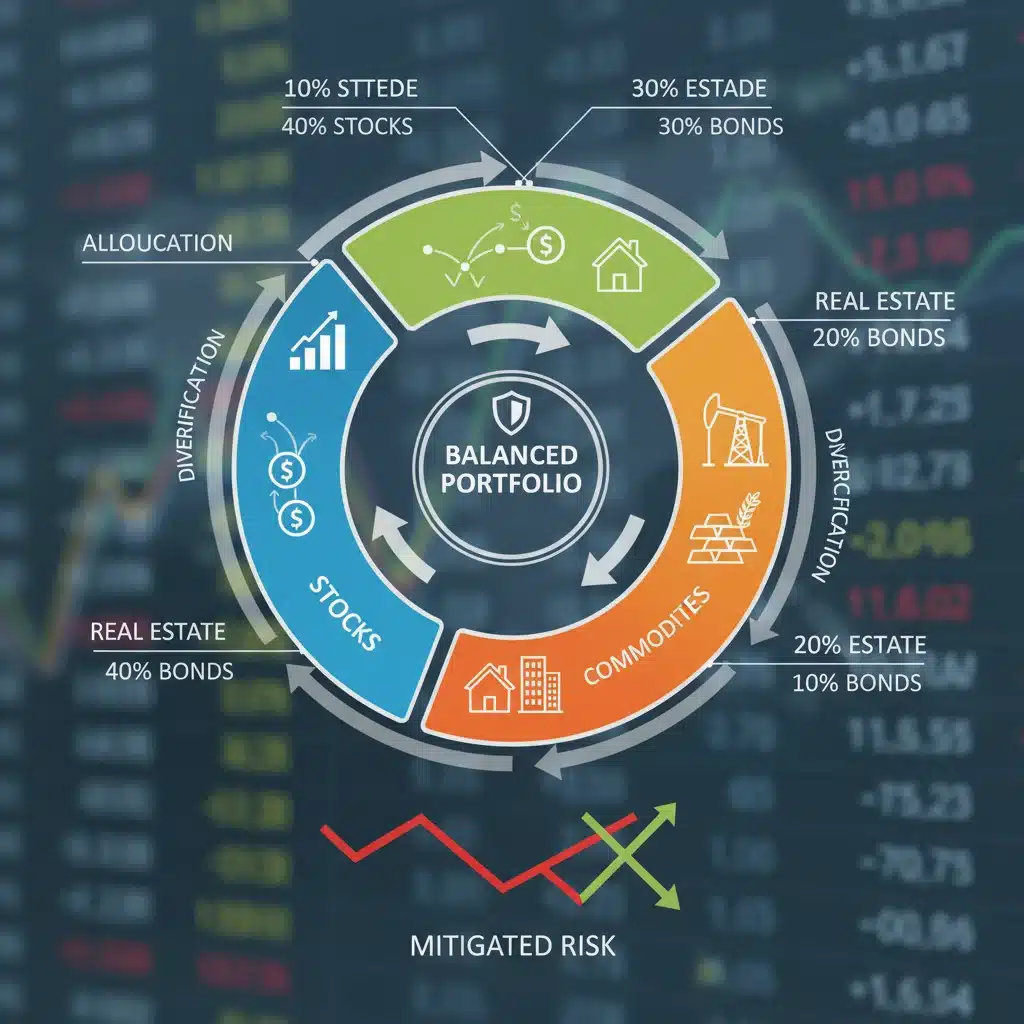
Diversification is perhaps the most fundamental principle of sound investing, and its importance is amplified during volatile periods. Spreading your investments across different asset classes, industries, and geographical regions can significantly reduce the impact of adverse events on any single holding. A truly diversified portfolio might include:
- Equities: A mix of large-cap, mid-cap, and small-cap stocks, as well as growth and value stocks, across various sectors (e.g., technology, healthcare, consumer staples, industrials).
- Fixed Income: Bonds, including government bonds, corporate bonds, and municipal bonds, with varying maturities and credit ratings. These often provide stability and income during equity market downturns.
- Real Estate: Direct property investments or Real Estate Investment Trusts (REITs) can offer diversification benefits due to their often low correlation with traditional stock markets.
- Commodities: Gold, silver, and other commodities can act as inflation hedges and safe havens during economic uncertainty.
- Alternative Investments: Private equity, hedge funds, and other less traditional assets can offer unique risk-return profiles, though they often come with higher minimum investments and less liquidity.
The goal is to create a portfolio where not all assets move in the same direction at the same time, thereby smoothing out overall returns. This is a crucial component of any robust set of market volatility strategies.
2. Rebalancing Your Portfolio
As market conditions shift, the original asset allocation of your portfolio can drift. Rebalancing involves periodically adjusting your portfolio back to your target asset allocation. For example, if equities have performed exceptionally well, they might now represent a larger percentage of your portfolio than you initially intended, increasing your risk exposure. Rebalancing would involve selling some of those outperforming assets and reallocating funds to underperforming ones or those that have fallen below their target weight. This disciplined approach ensures your portfolio’s risk level remains consistent with your comfort level and financial goals, making it a powerful tool within market volatility strategies.
3. Hedging Strategies: Protecting Against Downside Risk
Hedging involves taking an investment position that offsets the risk of another investment. While often associated with sophisticated institutional investors, some hedging strategies are accessible to individual investors:
- Options Contracts: Buying put options on individual stocks or market indexes can provide protection against price declines. A put option gives you the right, but not the obligation, to sell an asset at a predetermined price, effectively setting a floor for your losses.
- Inverse ETFs: These exchange-traded funds are designed to move in the opposite direction of a particular index or sector. For example, an inverse S&P 500 ETF would increase in value as the S&P 500 decreases. They can be short-term tools for hedging specific market segments.
- Gold and Precious Metals: Historically, gold has served as a safe-haven asset during times of economic uncertainty and market turmoil, often moving inversely to equities.
It’s important to note that hedging strategies can be complex and may involve costs, so they should be undertaken with a clear understanding of their mechanics and potential implications. They are advanced market volatility strategies that require careful consideration.
4. Maintaining Liquidity
Having a portion of your assets in highly liquid forms, such as cash or short-term high-quality bonds, is crucial during volatile periods. This liquidity serves multiple purposes:
- Emergency Fund: Ensures you don’t have to sell investments at a loss to cover unexpected expenses.
- Opportunity Fund: Provides capital to invest when market downturns present attractive buying opportunities.
- Peace of Mind: Knowing you have readily accessible funds can reduce stress and prevent emotional, hasty decisions during market turbulence.
5. Dollar-Cost Averaging (DCA)
Dollar-cost averaging involves investing a fixed amount of money at regular intervals, regardless of market fluctuations. When prices are high, your fixed investment buys fewer shares; when prices are low, it buys more. Over time, this strategy can average out your purchase price, reducing the risk of making a large investment at an unfavorable market peak. DCA removes much of the emotion from investing and is a highly effective long-term market volatility strategy.
6. Focusing on Quality and Fundamentals
During periods of heightened volatility, companies with strong fundamentals are generally more resilient. Look for businesses with:
- Strong Balance Sheets: Low debt, ample cash reserves.
- Consistent Earnings Growth: A track record of profitability and stable revenue.
- Competitive Advantages (Moats): Unique products, strong brand recognition, or high barriers to entry that protect their market share.
- Dividend-Paying Stocks: Companies that consistently pay dividends can provide a steady income stream, which can be particularly valuable during market downturns.
Investing in quality companies reduces your exposure to businesses that might struggle or even fail during economic contractions, reinforcing your market volatility strategies.

Advanced Considerations for Savvy Investors
For those looking to go beyond the basics, several advanced market volatility strategies can offer additional layers of protection and opportunity.
Sector Rotation
This strategy involves shifting investments between different sectors of the economy based on their expected performance in various economic cycles. During downturns or periods of uncertainty, defensive sectors like consumer staples, utilities, and healthcare tend to outperform. As the economy recovers, cyclical sectors such as technology, industrials, and discretionary consumer goods may take the lead. Successfully implementing sector rotation requires careful analysis of economic indicators and market trends.
Consideration of Absolute Return Strategies
Some investment vehicles, such as certain hedge funds or mutual funds employing absolute return strategies, aim to generate positive returns regardless of market direction. These funds often use a variety of complex techniques, including short selling, arbitrage, and derivatives. While potentially attractive, they typically come with higher fees and may not be suitable for all investors.
Tax-Loss Harvesting
In a volatile market, you might find yourself with investments that have declined in value. Tax-loss harvesting involves selling these losing investments to offset capital gains and, potentially, a limited amount of ordinary income. By doing so, you can reduce your tax liability. The proceeds can then be reinvested in similar (but not substantially identical) assets, maintaining your market exposure while realizing a tax benefit. This is a smart tactical move within comprehensive market volatility strategies.
The Psychological Aspect: Staying Rational Amidst Turmoil
Perhaps one of the most challenging aspects of navigating market volatility is managing your own emotions. Fear can lead to panic selling, and greed can lead to impulsive buying at market peaks. Both can be detrimental to your long-term financial health.
Stick to Your Investment Plan
A well-thought-out investment plan, based on your financial goals, risk tolerance, and time horizon, is your anchor in stormy markets. Resist the urge to deviate from your plan based on short-term market noise. Revisit and adjust your plan as life circumstances change, but not solely due to market fluctuations.
Avoid Market Timing
Trying to predict market tops and bottoms is notoriously difficult, even for seasoned professionals. Missing just a few of the market’s best performing days can significantly impair your long-term returns. Instead of timing the market, focus on time in the market. Consistent, long-term investing using strategies like dollar-cost averaging is generally more effective.
Educate Yourself and Seek Professional Advice
The more you understand about investing and market dynamics, the less likely you are to be swayed by fear or hype. Continuously educate yourself, and don’t hesitate to seek advice from a qualified financial advisor. A professional can provide an objective perspective, help you develop a personalized strategy, and keep you accountable to your long-term goals, especially when implementing complex market volatility strategies.
Conclusion: A Proactive Approach to Market Volatility
The prospect of a 15% increase in market volatility over the next six months might seem daunting, but it doesn’t have to be a cause for panic. By adopting a proactive and informed approach, you can transform potential threats into opportunities. Implementing robust market volatility strategies such as diversification, regular rebalancing, strategic hedging, maintaining liquidity, and focusing on quality investments will build resilience into your portfolio.
Remember that market fluctuations are a normal part of the investment cycle. Successful investing during volatile times isn’t about avoiding all risk, but about managing it intelligently. Stick to your plan, control your emotions, and leverage the insights of financial experts. With careful planning and execution, your portfolio can not only weather the upcoming volatility but emerge stronger and better positioned for future growth. The key is preparation, discipline, and a clear understanding of the tools at your disposal to navigate the ever-changing financial landscape.