
As we look ahead, understanding the nuances of how Medicare operates, particularly its premium structures, becomes paramount for millions of American seniors. The spotlight is now firmly fixed on the anticipated Medicare Part B 2026 premium adjustments. These changes are not just numbers on a page; they represent real financial shifts that will directly impact the budgets and financial planning of older adults across the nation. For many, Medicare Part B is a crucial component of their healthcare coverage, covering medically necessary services like doctor visits, outpatient care, and preventive services. Therefore, any adjustment, no matter how seemingly small, can have significant ripple effects on personal finances.
The Centers for Medicare & Medicaid Services (CMS) typically announces these adjustments in the fall of the preceding year. While official figures for 2026 are still some time away, a proactive approach to understanding the potential factors influencing these premiums is essential. This comprehensive guide aims to dissect the mechanisms behind Medicare Part B premium adjustments, explore the historical context, and, most importantly, provide an insightful analysis of the potential financial impact these changes could have on seniors’ budgets in 2026 and beyond. By delving into the intricacies of IRMAA (Income-Related Monthly Adjustment Amount) and other contributing factors, we hope to equip you with the knowledge needed to navigate these shifts effectively.
Decoding Medicare Part B Premiums: The Basics
Before we dive into the specifics of Medicare Part B 2026 adjustments, it’s vital to grasp the foundational aspects of how these premiums are determined. Medicare Part B is elective medical insurance, and most beneficiaries pay a monthly premium. This premium is typically deducted directly from Social Security benefits, Railroad Retirement benefits, or Civil Service Retirement benefits. For those who do not receive these benefits, they are billed directly by Medicare.
What Does Medicare Part B Cover?
Medicare Part B covers a wide array of services that are medically necessary, including:
- Doctor’s services (outpatient and inpatient)
- Outpatient hospital services
- Many preventive services (e.g., screenings, vaccines)
- Diagnostic tests (e.g., X-rays, lab tests)
- Ambulance services
- Durable medical equipment (DME)
- Mental health services (outpatient)
- Some home health care services
Understanding the scope of coverage is important because the premium you pay directly contributes to access to these essential services. The cost of providing these services, along with other administrative expenses, plays a significant role in determining premium levels.
How Are Premiums Calculated?
The standard monthly Part B premium is determined annually by the federal government. However, not everyone pays the standard premium. A key factor influencing individual premiums is income. This brings us to the Income-Related Monthly Adjustment Amount (IRMAA).
The Income-Related Monthly Adjustment Amount (IRMAA) and Medicare Part B 2026
IRMAA is a critical component of Medicare Part B premiums that significantly impacts higher-income beneficiaries. Since 2007, individuals with higher modified adjusted gross incomes (MAGI) have paid a higher Part B premium. This is not a penalty but rather a requirement that those with greater financial resources contribute more to the cost of their Medicare coverage.
How IRMAA Works
IRMAA is based on your MAGI from two years prior. For example, the 2026 IRMAA will likely be based on your 2024 MAGI. The Social Security Administration (SSA) typically uses tax return data provided by the IRS to determine if you owe IRMAA. There are several income brackets, and as your income crosses certain thresholds, your Part B premium increases incrementally.
The income thresholds for IRMAA are adjusted annually for inflation. Therefore, while we don’t have the exact 2026 thresholds yet, we can anticipate that they will be slightly higher than those in previous years to account for inflation. However, even with inflation adjustments, some seniors whose incomes have risen due to factors like increased investment returns or changes in retirement income could find themselves pushed into a higher IRMAA bracket for Medicare Part B 2026, leading to a noticeable increase in their monthly premiums.
Potential Impact of IRMAA on Medicare Part B 2026 Budgets
For seniors close to an IRMAA threshold, even a modest increase in income can trigger a substantial jump in their Part B premium. This is a common concern and highlights the importance of strategic financial planning, especially for those managing investments or other forms of retirement income. Understanding your MAGI and how it relates to IRMAA thresholds is crucial for anticipating your Medicare Part B 2026 costs.
Factors Influencing Medicare Part B 2026 Premium Adjustments
Several economic and healthcare-related factors contribute to the annual determination of Medicare Part B premiums. These are complex and often interconnected, making precise predictions challenging, but understanding them offers valuable insight into potential future trends for Medicare Part B 2026.
Healthcare Spending Trends
One of the primary drivers of Medicare Part B premiums is the overall trend in healthcare spending. If the cost of medical services, prescription drugs (especially those covered under Part B), and new medical technologies continues to rise, it naturally puts upward pressure on premiums. Factors like increased utilization of services, advancements in medical treatments, and rising administrative costs all play a role.
Inflation and Economic Conditions
General economic inflation directly affects the cost of goods and services, including those within the healthcare sector. A higher rate of inflation can lead to increased operating costs for healthcare providers, which can then be reflected in Medicare’s expenditures. Furthermore, the Social Security Cost-of-Living Adjustment (COLA) can indirectly influence Part B premiums through the ‘hold harmless’ provision, which we will discuss shortly.
Legislative Changes and Policy Decisions
Government policies and legislative changes can also significantly impact Medicare Part B premiums. New laws related to drug pricing, healthcare reform, or Medicare funding can either mitigate or exacerbate premium increases. For instance, efforts to lower prescription drug costs through legislation could potentially ease the burden on Part B premiums in the long run.
Medicare Trust Fund Solvency
The financial health of the Supplementary Medical Insurance (SMI) Trust Fund, which pays for Part B and Part D benefits, is another crucial factor. While the SMI Trust Fund is funded by premiums and general revenues, its solvency is regularly monitored, and adjustments to premiums are made to ensure its long-term stability. Any projected shortfalls could lead to more significant premium increases.
The ‘Hold Harmless’ Provision: A Safety Net for Some
A vital protection for many Medicare beneficiaries is the ‘hold harmless’ provision. This provision prevents a beneficiary’s Medicare Part B premium increase from exceeding the dollar amount of their Social Security COLA. In simpler terms, if your Social Security benefit increase is less than the projected Part B premium increase, your premium will be adjusted so that your net Social Security payment does not decrease.
However, it’s important to note that the ‘hold harmless’ provision does not apply to everyone. It generally applies if:
- You receive Social Security benefits.
- Your Part B premiums are deducted from your Social Security benefits.
- You are not subject to IRMAA (i.e., you pay the standard premium).
This means that higher-income beneficiaries subject to IRMAA, or those not yet collecting Social Security benefits, are not protected by this provision and could see their net income reduced by a Part B premium increase. This distinction is particularly important when considering the financial implications of Medicare Part B 2026 adjustments.
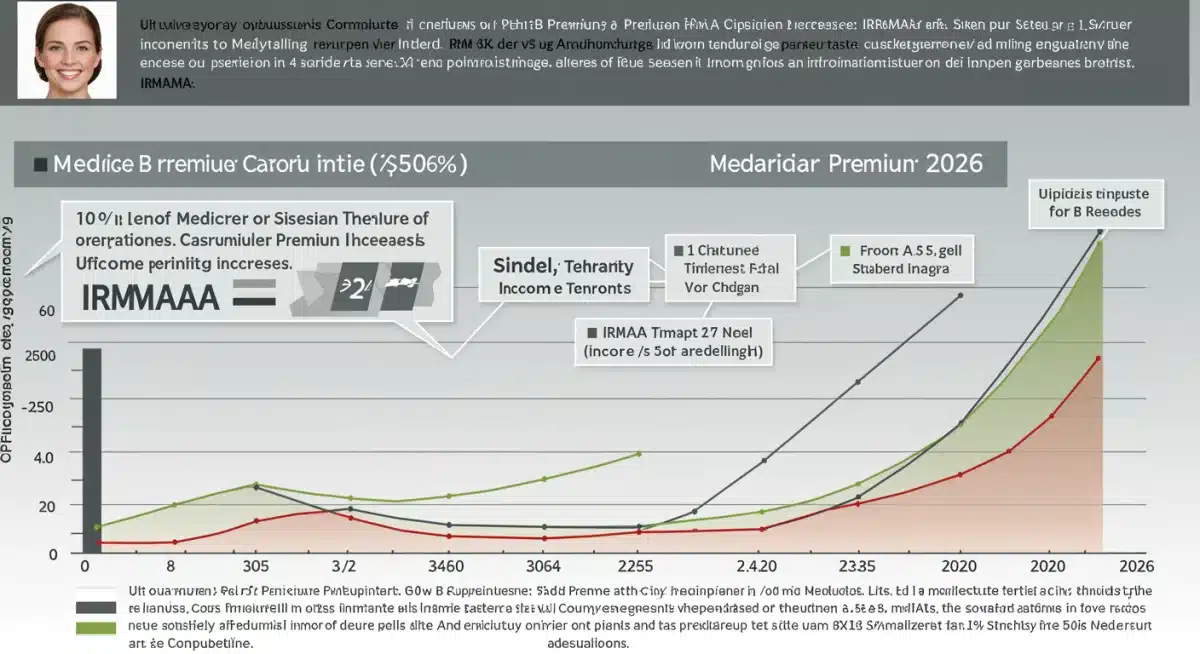
Anticipating the Financial Impact of Medicare Part B 2026 Adjustments
While specific figures are not yet available, we can analyze the potential financial impact of Medicare Part B 2026 premium adjustments based on historical trends and current economic outlooks. For many seniors, healthcare costs represent a significant portion of their retirement budget, and any increase can necessitate careful re-evaluation of their financial plans.
Direct Budgetary Strain
The most immediate and obvious impact of higher Part B premiums is the direct strain on monthly budgets. For individuals on fixed incomes, even a modest increase can mean less money available for other essential expenses like food, housing, utilities, or leisure activities. This is particularly true for those who are not protected by the ‘hold harmless’ provision.
Impact on Discretionary Spending
Increased Part B costs can lead to a reduction in discretionary spending. Seniors might have to cut back on travel, hobbies, or other activities that contribute to their quality of life. This can have broader implications for their overall well-being and mental health.
Pressure on Retirement Savings
For some, rising Part B premiums might necessitate drawing more heavily from retirement savings or investment portfolios earlier than planned. This can accelerate the depletion of these funds, potentially impacting long-term financial security. The need to maintain a healthy nest egg while covering increasing healthcare costs is a delicate balance.
Compounding Effect with Other Healthcare Costs
It’s crucial to remember that Part B premiums are just one piece of the healthcare cost puzzle. Seniors also face deductibles, co-payments, and co-insurance for Part B services, as well as premiums and out-of-pocket costs for Medicare Part D (prescription drug coverage) and potentially Medicare Supplement (Medigap) plans or Medicare Advantage plans. An increase in Part B premiums can compound the overall financial burden of healthcare, making comprehensive planning even more vital for Medicare Part B 2026.
Strategies to Mitigate the Financial Impact of Medicare Part B 2026
Forewarned is forearmed. While you cannot control the premium adjustments, you can certainly take steps to prepare and mitigate their financial impact. Proactive planning is key to navigating the changes to Medicare Part B 2026.
1. Monitor Your Income (Especially for IRMAA)
If you are near an IRMAA income threshold, be mindful of any financial decisions that could significantly increase your MAGI. This includes large capital gains from investments, significant withdrawals from traditional IRAs or 401(k)s (which are taxable income), or substantial salary increases if you are still working. Consulting with a financial advisor can help you strategize income management to potentially avoid or minimize IRMAA. Consider strategies like Roth conversions, which can reduce future taxable income, or qualified charitable distributions (QCDs) from IRAs, which can lower your MAGI.
2. Review Your Medicare Coverage Annually
The Medicare Annual Enrollment Period (AEP) from October 15 to December 7 each year is your opportunity to review and change your Medicare coverage. This includes Part D plans and Medicare Advantage plans. Even if your Part B premium increases, you might be able to find savings elsewhere in your healthcare coverage by switching to a plan with lower premiums, deductibles, or better prescription drug coverage that aligns with your needs.
3. Explore Medicare Savings Programs (MSPs)
For lower-income seniors, Medicare Savings Programs can provide significant relief by helping to pay for Part B premiums, deductibles, co-insurance, and co-payments. There are different types of MSPs, each with its own income and resource limits. Even if you think your income is too high, it’s worth checking eligibility, as the limits are more generous than many realize. These programs can be a lifeline for managing the cost of Medicare Part B 2026.
4. Budgeting and Financial Planning
Integrate projected healthcare costs, including potential increases in Medicare Part B 2026 premiums, into your overall retirement budget. Regularly review your spending and look for areas where you can cut back if necessary. Consider creating an emergency fund specifically for unexpected medical expenses or rising healthcare costs. A well-structured budget can absorb minor shocks more easily.
5. Stay Informed
Keep abreast of official announcements from CMS and the Social Security Administration regarding Medicare Part B premiums for 2026. Reliable financial news sources and Medicare-specific websites are excellent resources. Being informed allows you to react promptly to changes and make timely adjustments to your financial strategy.
6. Consider Working Longer (If Feasible)
For some, continuing to work part-time or delaying retirement can provide additional income to offset rising healthcare costs. If you have employer-sponsored health insurance, it might even allow you to delay enrolling in Part B without penalty, depending on your employer’s size and other factors. However, this is a highly personal decision with many considerations.
7. Leverage Health Savings Accounts (HSAs)
If you were eligible for and contributed to an HSA before enrolling in Medicare, these accounts can be a powerful tool for covering healthcare costs in retirement, including Part B premiums (though not for Medigap premiums). HSA funds grow tax-free, and withdrawals for qualified medical expenses are also tax-free, making them a very efficient way to save for future healthcare expenditures. This can be especially beneficial for managing the costs associated with Medicare Part B 2026.

The Broader Implications of Rising Medicare Part B 2026 Premiums
Beyond individual budgets, the continuous rise in Medicare Part B premiums has broader societal and economic implications. It underscores the challenges facing the U.S. healthcare system and the need for sustainable solutions.
Impact on Healthcare Access and Equity
If premiums become increasingly unaffordable for some seniors, it could potentially lead to delays in seeking necessary medical care or even foregoing care altogether. This can exacerbate existing health conditions and lead to worse health outcomes, particularly for vulnerable populations. Ensuring equitable access to healthcare, despite rising costs, remains a critical policy objective.
Policy Debates and Future Reforms
The trajectory of Medicare costs, including Part B premiums, fuels ongoing policy debates about the future of Medicare. Discussions often revolve around cost containment measures, drug pricing reforms, alternative payment models, and potential changes to eligibility or benefit structures. The adjustments for Medicare Part B 2026 will undoubtedly be part of these broader discussions.
The Role of Preventive Care
Investing in preventive care, much of which is covered by Part B with no out-of-pocket costs, can be a long-term strategy to mitigate overall healthcare spending. By preventing serious illnesses or managing chronic conditions effectively, the need for more expensive treatments down the line can be reduced, potentially easing pressure on future premium increases. Seniors should take full advantage of the preventive services offered by Medicare Part B 2026.
Conclusion: Preparing for Medicare Part B 2026
The forthcoming Medicare Part B 2026 premium adjustments are a significant financial consideration for millions of American seniors. While the exact figures are yet to be released, understanding the underlying factors – healthcare spending trends, inflation, IRMAA, and legislative policies – empowers beneficiaries to anticipate and prepare for these changes.
Proactive financial planning, including careful income management, annual review of Medicare coverage, exploration of assistance programs, and robust budgeting, are essential strategies to mitigate the potential financial impact. Staying informed about official announcements and seeking professional financial advice can further strengthen your position.
Medicare remains an invaluable program, providing essential healthcare coverage to older adults. By understanding its mechanics and preparing for future adjustments, seniors can continue to access the care they need while maintaining their financial well-being. The conversation around Medicare Part B 2026 is not just about premiums; it’s about ensuring a secure and healthy future for our senior population.