2026 Bond Yields: A Comprehensive Comparison Across Maturities
Anúncios
Understanding the intricacies of fixed-income investments is paramount for any savvy investor looking to optimize their portfolio. Among the myriad of options available, bonds with a specific maturity date, such as those maturing in 2026, often draw significant attention. The landscape of 2026 bond yields is dynamic, influenced by a confluence of economic factors, central bank policies, and market sentiment. This comprehensive guide aims to dissect the various aspects of 2026 bond yields, comparing them across different maturities and providing a robust framework for informed investment decisions.
Fixed-income securities, particularly bonds, are a cornerstone of diversified investment portfolios. They offer a relatively stable income stream and can act as a counterbalance to more volatile assets like stocks. However, the ‘fixed’ in fixed income doesn’t mean static returns. Yields fluctuate, and understanding these fluctuations, especially for a specific maturity like 2026, is crucial. This article will delve into what drives these yields, how different maturities compare, and what investors should consider when evaluating their options.
Anúncios
The Basics of Bond Yields and Maturities
Before we dive into the specifics of 2026 bond yields, let’s establish a foundational understanding of what bond yields are and how maturity plays a role. A bond yield represents the return an investor receives on a bond. It’s not as simple as the coupon rate, as market prices and the time to maturity significantly impact the actual yield an investor will realize.
What is a Bond Yield?
In its simplest form, the yield on a bond is the total return an investor receives from the bond over its life. There are several ways to calculate yield, each providing a slightly different perspective:
- Coupon Rate: This is the annual interest rate paid by the bond issuer, expressed as a percentage of the bond’s face value. It’s the stated interest rate printed on the bond certificate.
- Current Yield: This measures the annual income (coupon payments) relative to the bond’s current market price. It’s a simple calculation: (Annual Coupon Payment / Current Market Price) * 100. It doesn’t account for the time value of money or any capital gains/losses if the bond is held to maturity.
- Yield to Maturity (YTM): This is the most comprehensive measure of a bond’s return. YTM is the total return an investor can expect to receive if they hold the bond until it matures, assuming all coupon payments are reinvested at the same rate. It takes into account the bond’s current market price, par value, coupon interest rate, and time to maturity. This is often the most relevant yield when discussing investment decisions.
- Yield to Call (YTC): For callable bonds, this is the yield an investor receives if the bond is called (repurchased by the issuer) before its stated maturity date.
When we discuss 2026 bond yields, we are primarily concerned with the Yield to Maturity (YTM) for bonds that will reach their maturity date in the year 2026.
The Significance of Maturity
Maturity refers to the date on which the principal amount of a bond is repaid to the bondholder. Bonds can have short-term maturities (less than 1 year), medium-term maturities (1 to 10 years), or long-term maturities (more than 10 years). The maturity date is a critical factor influencing a bond’s risk and return profile.
- Interest Rate Risk: Longer-maturity bonds are generally more sensitive to changes in interest rates. A small increase in interest rates can lead to a more significant decrease in the price of a long-term bond compared to a short-term bond. This is because the investor is locked into a fixed interest rate for a longer period, and if new bonds are issued at higher rates, the older, lower-rate bonds become less attractive.
- Reinvestment Risk: Shorter-maturity bonds carry higher reinvestment risk. When a short-term bond matures, the investor needs to reinvest the principal. If interest rates have fallen, they might have to reinvest at a lower rate, leading to reduced income.
- Liquidity Risk: While generally not a major concern for highly traded government bonds, some longer-term or less common corporate bonds might have lower liquidity, making them harder to sell quickly without impacting the price.
For bonds maturing in 2026, we are looking at a mid-term maturity horizon from today’s perspective. This places them in a unique position regarding interest rate sensitivity and reinvestment considerations.
Factors Influencing 2026 Bond Yields
The yield on any bond, including those maturing in 2026, is a function of several interconnected economic and market forces. Understanding these drivers is essential for forecasting potential movements in 2026 bond yields and making strategic investment decisions.
1. Central Bank Monetary Policy
The actions of central banks, such as the U.S. Federal Reserve, the European Central Bank, or the Bank of England, are arguably the most significant determinant of bond yields. When central banks raise benchmark interest rates (e.g., the federal funds rate), the cost of borrowing increases across the economy. This typically leads to higher bond yields as new bonds are issued at higher rates to compete with existing debt and attract investors. Conversely, when central banks lower rates, bond yields tend to fall.
For 2026 bond yields, the market’s expectation of future central bank policy over the next few years plays a crucial role. If the market anticipates aggressive rate hikes, 2026 bond yields will likely climb. If rate cuts are expected, yields might decline.
2. Inflation Expectations
Inflation erodes the purchasing power of future cash flows from a bond. Investors demand higher yields to compensate for this loss. If inflation is expected to be high over the next few years leading up to 2026, bond yields will likely rise to offer a real (inflation-adjusted) return. Conversely, low inflation expectations can lead to lower yields.
Central banks often use monetary policy to manage inflation, creating a feedback loop between interest rates and inflation expectations that directly impacts bond yields.
3. Economic Growth Outlook
A strong economic growth outlook generally leads to higher bond yields. In a robust economy, there is greater demand for capital, and businesses are more confident in their ability to repay debt, which can push interest rates up. Conversely, during periods of economic slowdown or recession, investors often flock to the relative safety of bonds, increasing demand and driving yields down.
The trajectory of economic growth between now and 2026 will heavily influence the yields of bonds maturing in that year.
4. Supply and Demand Dynamics
Like any other market, bond prices and yields are subject to the forces of supply and demand. If a government or corporation issues a large volume of new bonds, increasing the supply, yields may need to rise to attract sufficient buyers. Conversely, if there’s high demand for bonds (e.g., during times of market uncertainty), prices will go up, and yields will come down.
5. Credit Risk
The creditworthiness of the bond issuer also impacts its yield. Bonds issued by entities with higher credit risk (e.g., some corporations or emerging market governments) must offer higher yields to compensate investors for the increased risk of default. Government bonds from stable economies (like U.S. Treasuries) are generally considered ‘risk-free’ and therefore offer lower yields compared to corporate bonds with similar maturities.
When comparing 2026 bond yields, it’s crucial to compare apples to apples; a U.S. Treasury bond maturing in 2026 will have a different yield than a corporate bond with the same maturity due to differing credit risk.
Comparing 2026 Bond Yields Across Different Maturities
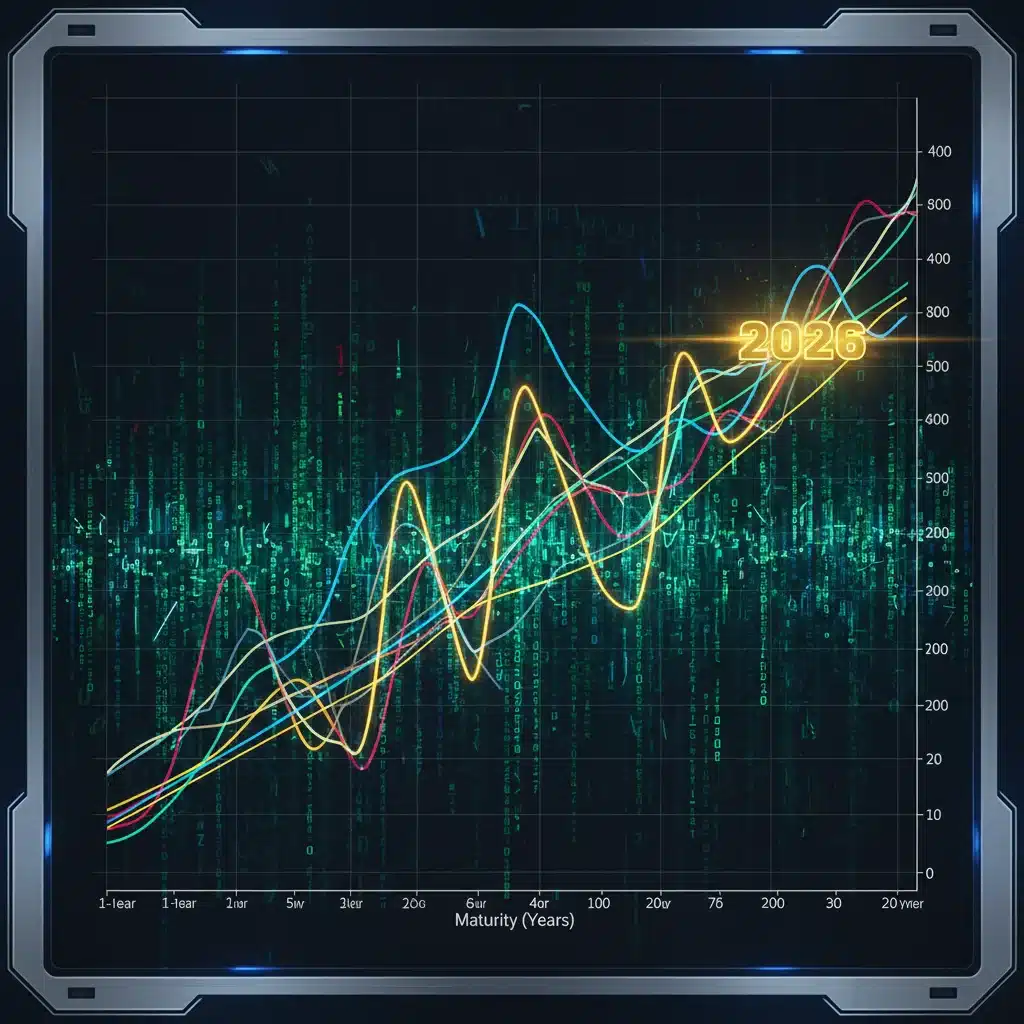
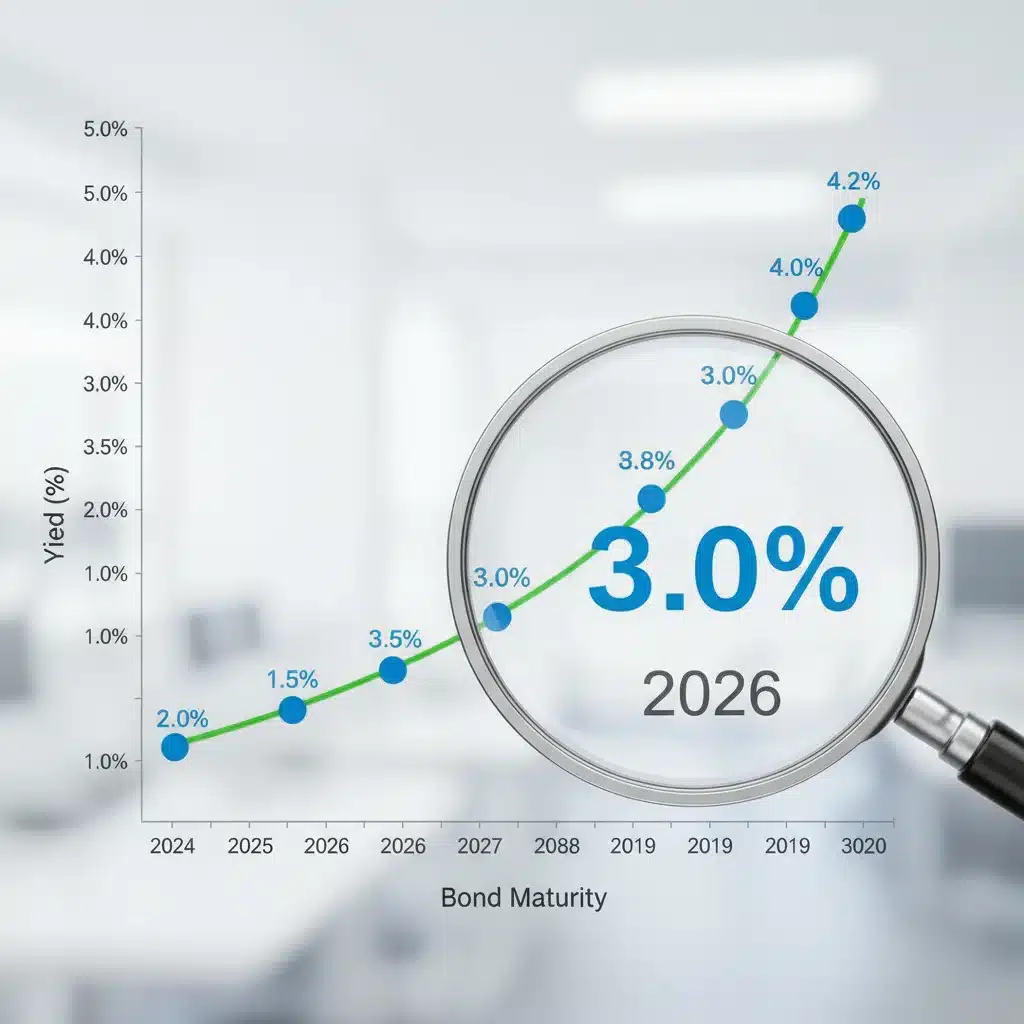
The yield curve is a graphical representation that plots the yields of bonds with equal credit quality but differing maturity dates. It’s a powerful tool for understanding market expectations about future interest rates and economic conditions. By examining the yield curve, we can compare 2026 bond yields to those of shorter and longer maturities.
Understanding the Yield Curve
The most common yield curve is for U.S. Treasury securities, as they are considered virtually risk-free and serve as a benchmark for other bonds. There are three primary shapes the yield curve can take:
- Normal Yield Curve (Upward Sloping): This is the most common shape, where longer-term bonds have higher yields than shorter-term bonds. This reflects the expectation that investors demand more compensation for tying up their money for longer periods and for the increased interest rate risk associated with longer maturities. In this scenario, 2026 bond yields would typically be higher than 1-year or 2-year bond yields but lower than 10-year or 30-year bond yields.
- Inverted Yield Curve (Downward Sloping): This occurs when short-term bond yields are higher than long-term bond yields. This is an unusual and often concerning phenomenon, as it has historically preceded economic recessions. An inverted curve suggests that the market expects interest rates to fall in the future, often due to an anticipated economic slowdown and subsequent central bank rate cuts. If the curve is inverted, 2026 bond yields might be lower than very short-term yields.
- Flat Yield Curve: In this scenario, there is little difference between short-term and long-term yields. A flat curve often indicates a transition period, either before an inversion or before a return to a normal curve, and can signal economic uncertainty.
By observing the position of 2026 bond yields on the current yield curve, investors can gauge market sentiment and future expectations. For instance, if 2026 yields are significantly higher than current short-term rates, it implies expectations of continued economic growth and potentially higher inflation or further rate hikes by central banks.
Practical Comparison: 2026 vs. Other Maturities
Let’s consider how 2026 bond yields might compare to other common maturities:
- Short-Term Bonds (e.g., 1-year, 2-year): These bonds are highly sensitive to current central bank policy rates. Their yields reflect immediate economic conditions and short-term interest rate expectations. If the yield curve is normal, 2026 bond yields will likely be higher than these shorter maturities, offering greater compensation for the longer duration. However, if the curve is inverted, short-term yields could temporarily surpass 2026 yields.
- Long-Term Bonds (e.g., 10-year, 30-year): These maturities are more sensitive to long-term inflation expectations and the overall economic growth trajectory. They also carry higher interest rate risk. In a normal yield curve environment, 2026 bond yields would be lower than these longer maturities. If the curve flattens, the difference between 2026 yields and longer-term yields would narrow.
Investors must consider their investment horizon and risk tolerance when comparing these maturities. A bond maturing in 2026 offers a medium-term horizon, balancing some of the liquidity of short-term bonds with some of the higher yield potential of longer-term bonds, without the extreme interest rate sensitivity of very long durations.
Investment Implications and Strategies for 2026 Bond Yields
Understanding 2026 bond yields and their drivers is not merely an academic exercise; it has direct implications for investment strategies. Investors can leverage this knowledge to position their fixed-income portfolios effectively.
1. Matching Liabilities with Assets
For investors with specific future financial obligations around 2026 (e.g., a child’s college tuition, a down payment on a house, or a planned retirement date), investing in bonds maturing in or around 2026 can be an effective strategy. This ‘liability-driven investing’ aims to match the maturity of fixed-income assets with the timing of future liabilities, reducing reinvestment risk and providing predictable cash flows when needed.
2. Interest Rate Expectations
If an investor anticipates that interest rates will rise significantly in the near term, they might prefer shorter-duration bonds, or even cash, to avoid capital losses on longer-term holdings. As rates rise, the market price of existing bonds with lower coupon rates falls. Conversely, if an investor expects rates to fall, locking in current 2026 bond yields could be advantageous, as the value of these bonds would likely increase.
3. Diversification and Risk Management
Bonds, including those maturing in 2026, play a crucial role in portfolio diversification. They can provide stability and income, especially during periods of equity market volatility. However, it’s important to diversify not just across different asset classes but also within fixed income itself, including different maturities, credit qualities, and issuers.
4. Inflation Hedging
While traditional fixed-rate bonds are vulnerable to inflation, some investors might consider inflation-protected securities (TIPS in the U.S.) that also mature around 2026. These bonds adjust their principal value in line with inflation, offering a degree of protection against rising prices. Comparing the real yields of TIPS maturing in 2026 with the nominal yields of conventional 2026 bond yields can provide insights into market inflation expectations.
5. Credit Risk Assessment
When evaluating corporate bonds maturing in 2026, a thorough credit risk assessment is essential. This involves analyzing the issuer’s financial health, industry outlook, and overall economic conditions. Higher-rated bonds (e.g., AAA, AA) offer lower yields but greater safety, while lower-rated bonds (e.g., BBB, BB) offer higher yields but come with increased default risk.
The Role of Economic Indicators in Forecasting 2026 Bond Yields
To make informed decisions about 2026 bond yields, investors must continuously monitor a range of economic indicators. These indicators provide clues about the health of the economy, inflation pressures, and the likely direction of central bank policy.
Key Economic Indicators to Watch:
- Inflation Data (CPI, PCE): Consumer Price Index (CPI) and Personal Consumption Expenditures (PCE) are key measures of inflation. Persistently high inflation data will likely pressure central banks to raise rates, pushing 2026 bond yields higher.
- Employment Data (Non-Farm Payrolls, Unemployment Rate): Strong employment figures typically signal a robust economy, which can lead to inflationary pressures and higher yields. A weakening job market, conversely, might suggest an economic slowdown and could lead to lower yields.
- GDP Growth: Gross Domestic Product (GDP) measures economic output. Strong GDP growth often correlates with higher bond yields, while sluggish growth can lead to lower yields.
- Manufacturing and Services PMIs: Purchasing Managers’ Indexes (PMIs) provide a snapshot of economic activity in the manufacturing and services sectors. Stronger PMIs suggest economic expansion, potentially leading to higher yields.
- Retail Sales: This indicator reflects consumer spending, a major component of economic activity. Robust retail sales can contribute to inflation and higher yields.
- Central Bank Statements and Minutes: Speeches, press conferences, and meeting minutes from central bank officials offer direct insights into their thinking on monetary policy, inflation, and economic outlook, all of which directly impact 2026 bond yields.

By integrating these economic indicators into their analysis, investors can develop a more nuanced understanding of the forces shaping 2026 bond yields and adjust their portfolios accordingly.
Navigating the Current Market Environment for 2026 Bonds
The current market environment is characterized by a unique set of challenges and opportunities. Geopolitical events, persistent inflation concerns, and the ongoing recalibration of central bank policies all contribute to the volatility and uncertainty in fixed-income markets. For investors focusing on 2026 bond yields, it’s crucial to consider these contemporary factors.
The Impact of Global Events
Global events, such as international conflicts, supply chain disruptions, or significant policy shifts in major economies, can have a ripple effect on bond markets worldwide. For example, a sudden increase in energy prices due to geopolitical tensions can fuel inflation, prompting central banks to tighten monetary policy and push 2026 bond yields higher.
Inflation’s Enduring Influence
Even as inflation might show signs of moderating, its long-term trajectory remains a key concern. If the market believes inflation will remain stubbornly above central bank targets until 2026, then 2026 bond yields will likely reflect this by offering a higher premium to investors. Conversely, if inflation is brought under control sooner, yields could stabilize or even decline.
Central Bank Forward Guidance
Central banks often provide ‘forward guidance’ on their expected future monetary policy. This guidance, while not set in stone, helps shape market expectations for interest rates. Investors should pay close attention to any signals regarding the path of interest rates between now and 2026, as this will be a dominant factor for 2026 bond yields.
Technological Advancements and Productivity
Less immediate but equally important is the impact of technological advancements and productivity growth. If technological innovation leads to sustained increases in productivity, it can help temper inflation while supporting economic growth. This could create an environment where 2026 bond yields remain attractive without being excessively high due to runaway inflation.
Investors must remain agile and continuously re-evaluate their assumptions about the future economic landscape. The fixed-income market is not static, and what might seem like an attractive yield today could change significantly tomorrow.
Conclusion: Making Informed Decisions on 2026 Bond Yields
In conclusion, navigating the world of fixed-income investments, particularly when focusing on specific maturities like 2026 bond yields, requires a multifaceted approach. It’s not enough to simply look at the stated yield; a deeper understanding of the underlying economic forces, central bank policies, and market dynamics is essential.
We’ve explored the fundamental concepts of bond yields and maturities, delved into the key factors that influence 2026 bond yields, and discussed how these yields compare across the broader yield curve. Furthermore, we’ve outlined practical investment strategies and highlighted the critical role of economic indicators in forecasting future movements.
For investors seeking stability, income, or a strategic match for future liabilities, bonds maturing in 2026 offer a compelling option. However, the decision to invest should always be preceded by thorough research, a clear understanding of personal financial goals, and a realistic assessment of risk tolerance. By staying informed about global economic trends and central bank rhetoric, investors can make well-reasoned choices that optimize their fixed-income portfolios and contribute to their overall financial success.
The journey to 2026 is filled with potential economic shifts. Those who understand the nuances of bond yields and actively monitor the influencing factors will be best positioned to capitalize on opportunities and mitigate risks in the fixed-income market.