The Impact of AI on K-12 Curriculum in the US: What Educators Need to Know by 2026
The landscape of education is undergoing a seismic shift, driven by the relentless march of artificial intelligence (AI). For K-12 educators in the United States, the year 2026 is not just another academic year; it represents a crucial juncture where the integration of AI into the curriculum will transition from an emerging trend to an undeniable imperative. The impact of AI on K-12 curriculum is profound, reshaping everything from pedagogical approaches to assessment methods. Understanding this transformation, and proactively preparing for it, is paramount for every educator, administrator, and policymaker.
This comprehensive guide aims to illuminate the multifaceted ways AI will influence K-12 education by 2026. We will explore the opportunities AI presents, the challenges it introduces, and the essential strategies educators can adopt to navigate this new era effectively. Our focus is on providing actionable insights that empower educators to harness the power of AI to create more engaging, personalized, and effective learning experiences for their students. The integration of AI K-12 curriculum is not merely about introducing new tools; it’s about fundamentally rethinking what, how, and why we teach.
The Inevitable Rise of AI in K-12 Education
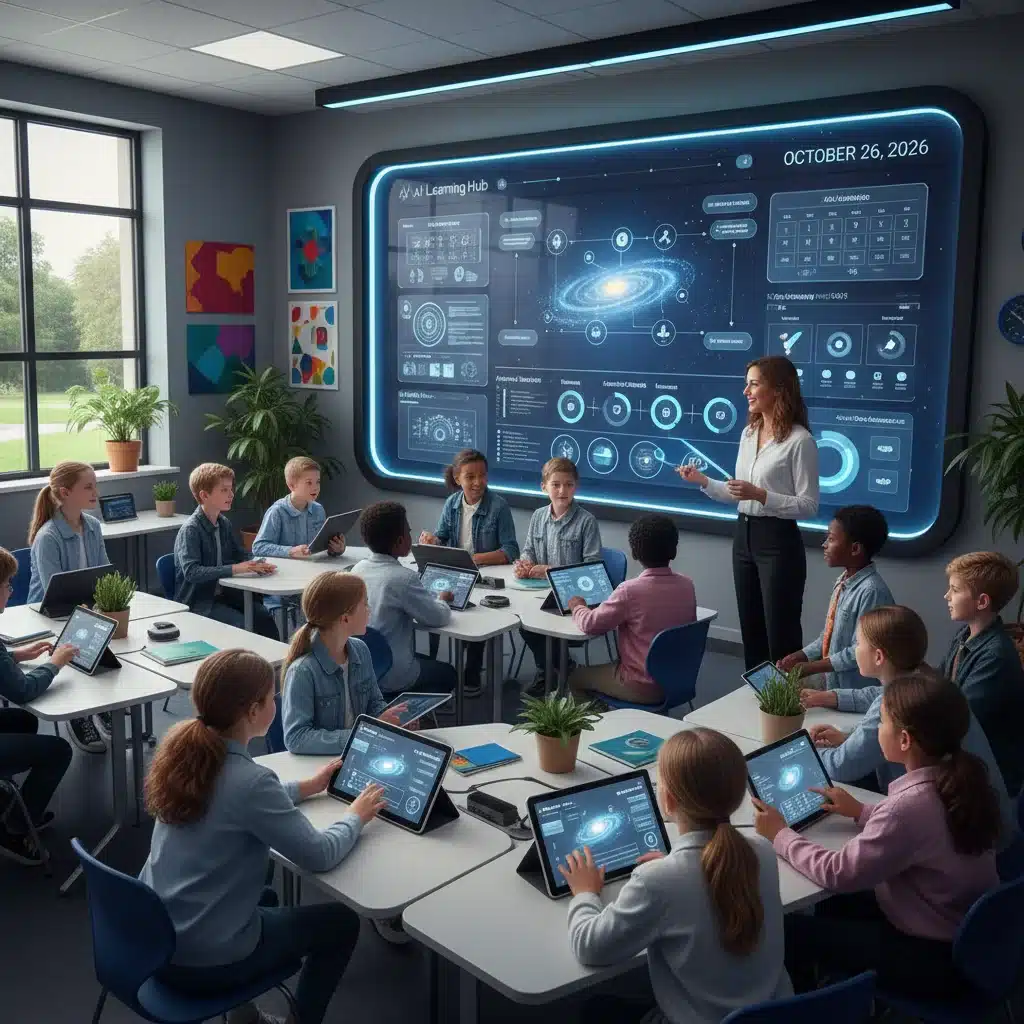
Artificial intelligence is no longer a futuristic concept confined to science fiction; it is a present-day reality rapidly permeating every sector, including education. Its influence is growing exponentially, driven by advancements in machine learning, natural language processing, and data analytics. In the context of K-12 education, AI’s applications are vast and varied, ranging from administrative efficiencies to sophisticated personalized learning platforms. By 2026, the presence of AI in K-12 curriculum will be ubiquitous, necessitating a fundamental shift in how educational institutions operate and how teachers instruct.
The driving forces behind this integration are manifold. Firstly, the increasing availability of affordable and accessible AI tools makes their adoption more feasible for schools with varying budgets. Secondly, the demand for future-ready skills in a rapidly evolving job market compels educational systems to equip students with AI literacy and critical thinking skills. Thirdly, the potential of AI to address long-standing educational challenges, such as learning disparities and teacher workload, is becoming increasingly apparent. This combination of technological readiness, societal demand, and pedagogical potential makes the impact of AI on K-12 curriculum an urgent topic for discussion and action.
Consider the trajectory of other technological advancements in education, such as the internet or personal computers. While initial adoption might have been slow, their eventual integration became indispensable. AI is on a similar, if not faster, trajectory. Educators who understand this inevitability and actively engage with it will be better positioned to lead their students through this transformative period, rather than being left behind. The proactive embrace of AI K-12 curriculum is not just about staying current; it’s about shaping the future of learning.
Transformative Opportunities: How AI Will Reshape K-12 Learning
The integration of AI into K-12 curriculum offers a plethora of opportunities to revolutionize learning and teaching. These opportunities extend beyond mere automation, promising to enhance student engagement, personalize learning paths, and provide invaluable support for educators.
Personalized Learning at Scale
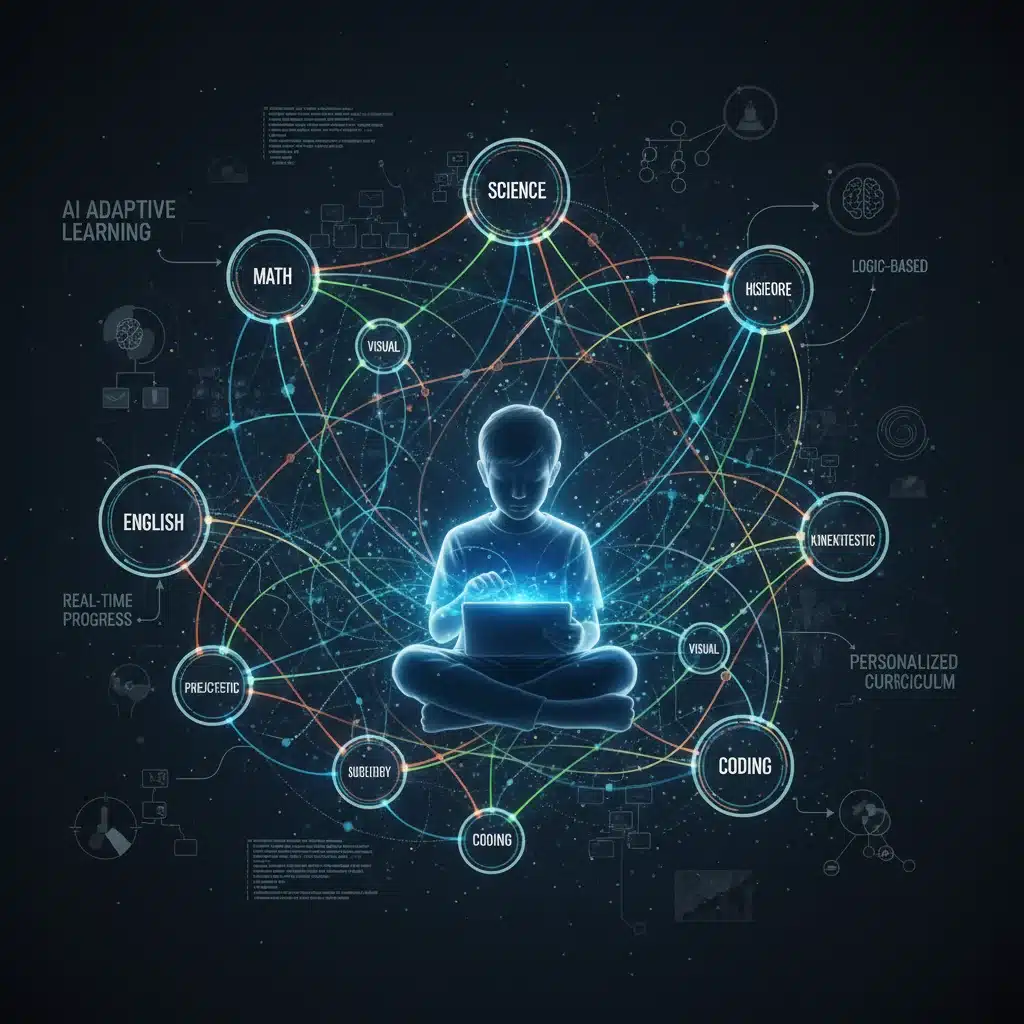
One of the most significant promises of AI in education is its ability to deliver truly personalized learning experiences. Traditional classrooms often struggle to cater to the diverse learning needs, paces, and styles of individual students. AI-powered platforms can analyze student performance data, identify strengths and weaknesses, and then adapt content, exercises, and instructional strategies accordingly. This means a student struggling with a particular concept can receive targeted support and additional resources, while an advanced student can be challenged with more complex material, all automatically tailored by AI.
Imagine an AI tutor that can provide instant feedback, explain concepts in multiple ways, and even identify emotional cues to adjust its approach. This level of individualized attention, previously impossible in a classroom setting, becomes scalable with AI. The impact on K-12 curriculum here is profound: instead of a one-size-fits-all approach, education can become a truly student-centric journey, optimizing outcomes for every learner.
Automating Administrative Tasks and Assessment
Educators spend a significant portion of their time on administrative tasks, grading, and routine assessments. AI can automate many of these time-consuming processes, freeing up teachers to focus on what they do best: teaching and building relationships with students. AI tools can grade multiple-choice questions, provide feedback on written assignments based on rubrics, and even analyze student engagement patterns to flag potential issues.
Beyond simple automation, AI can offer sophisticated analytical insights into student performance data, helping teachers identify trends, predict potential learning difficulties, and intervene proactively. This shifts the teacher’s role from a grader to a facilitator and mentor, armed with data-driven insights to guide their instruction. The efficiency gains from AI K-12 curriculum in this area can significantly reduce teacher burnout and improve overall school operational effectiveness.
Enriching Content and Accessibility
AI can also enrich the educational content available to students and improve accessibility. AI-powered translation tools can make educational materials available in multiple languages, breaking down language barriers. Text-to-speech and speech-to-text technologies can assist students with learning disabilities or those who prefer alternative modes of learning. AI can generate dynamic and interactive learning materials, including simulations and virtual labs, making abstract concepts more tangible and engaging.
Furthermore, AI can help curate vast amounts of information, presenting students with relevant and up-to-date resources tailored to their learning objectives. This democratizes access to knowledge and provides students with a richer, more diverse learning environment than ever before. The implications for AI K-12 curriculum are clear: a more inclusive and resource-rich educational experience for all.
Navigating the Challenges: Ethical and Practical Considerations
While the opportunities presented by AI in K-12 curriculum are immense, it is equally important to address the challenges and ethical considerations that accompany its integration. Proactive planning and robust policy frameworks will be essential to mitigate potential risks and ensure equitable and responsible deployment.
Data Privacy and Security
The use of AI in education inherently involves the collection and analysis of student data. This raises significant concerns about data privacy and security. Schools and districts must implement stringent protocols to protect sensitive student information from breaches and misuse. Clear policies on data ownership, access, and retention are crucial. Parents and students need to be informed about how their data is being used and have the right to opt-out or request data deletion.
The ethical implications of AI K-12 curriculum extend to how data is used to make decisions about students. Algorithmic bias, where AI systems inadvertently perpetuate or amplify existing societal biases, is a serious concern. If an AI system is trained on biased data, it could lead to unfair or inequitable outcomes for certain student groups. Addressing these biases requires careful selection of data, rigorous testing of AI models, and ongoing human oversight.
Equity and Access
The digital divide remains a significant challenge in education. The benefits of AI in K-12 curriculum will only be realized if all students have equitable access to the necessary technology, internet connectivity, and digital literacy skills. Districts must ensure that the integration of AI does not exacerbate existing inequalities, but rather helps to bridge them. This may require significant investment in infrastructure, devices, and training programs, particularly in underserved communities.
Furthermore, the cost of implementing sophisticated AI solutions can be prohibitive for some schools. Policy makers and educational leaders need to explore funding mechanisms and partnerships to ensure that AI tools are accessible to all, regardless of socioeconomic status. The goal should be to leverage AI to create a more equitable educational system, not to widen the gap between the technologically rich and poor.
Teacher Training and Professional Development
The successful integration of AI in K-12 curriculum hinges on the preparedness of educators. Teachers need more than just technical skills; they need to understand the pedagogical implications of AI, how to effectively integrate AI tools into their lesson plans, and how to critically evaluate the outputs of AI systems. This requires robust and ongoing professional development programs that go beyond basic software training.
Educators need to be empowered to become ‘AI-literate,’ understanding the capabilities and limitations of AI, its ethical considerations, and how to foster AI literacy in their students. This also involves a mindset shift, where teachers see AI not as a replacement, but as a powerful assistant that augments their capabilities. Investing in comprehensive teacher training is perhaps the most critical factor in ensuring the positive impact of AI on K-12 curriculum.

Curriculum Redesign and Learning Objectives
The introduction of AI will necessitate a significant redesign of K-12 curriculum itself. Traditional curricula, often focused on rote memorization and standardized testing, may not adequately prepare students for an AI-driven world. The emphasis needs to shift towards developing higher-order thinking skills, creativity, problem-solving, critical analysis, and adaptability. Students will need to understand how AI works, its societal implications, and how to interact with AI responsibly.
New learning objectives related to AI literacy, computational thinking, and ethical AI use will need to be incorporated across various subjects. This is not about adding AI as a separate subject, but rather integrating AI concepts and applications within existing disciplines, from mathematics and science to humanities and arts. The transformation of AI K-12 curriculum will require collaboration between educators, subject matter experts, and AI specialists to create relevant and future-proof learning experiences.
Strategies for Educators: Preparing for AI in K-12 by 2026
To effectively prepare for the pervasive impact of AI on K-12 curriculum by 2026, educators can adopt several proactive strategies. These strategies focus on professional growth, pedagogical innovation, and fostering a future-ready learning environment.
Embrace Continuous Learning and Professional Development
The first and most crucial step for educators is to commit to continuous learning about AI. This involves staying updated on the latest AI advancements, exploring educational AI tools, and participating in professional development programs. Seek out workshops, online courses, and communities of practice that focus on AI in education. Understanding the fundamentals of AI, its ethical considerations, and its potential applications in the classroom will build confidence and competence.
Don’t wait for top-down mandates; proactively explore how AI can enhance your teaching practices. Experiment with AI-powered tools for lesson planning, content creation, assessment, and student engagement. Share your findings and experiences with colleagues to foster a culture of collaborative learning around AI K-12 curriculum.
Integrate AI Literacy into Existing Subjects
AI literacy should not be treated as a standalone subject but rather woven into the fabric of the existing K-12 curriculum. In science classes, discuss how AI is used in research and discovery. In social studies, explore the ethical implications of AI on society and governance. In English, analyze AI-generated text and discuss issues of authenticity and bias. In math, delve into the algorithms that power AI systems.
Encourage students to critically evaluate AI-generated content, understand the concept of algorithmic bias, and recognize the importance of human oversight. Foster discussions about the responsible use of AI and its potential impact on their future careers and lives. This cross-curricular integration ensures that students develop a holistic understanding of the impact of AI on K-12 curriculum.
Foster Critical Thinking and Problem-Solving Skills
In an AI-powered world, the ability to think critically, solve complex problems, and adapt to new situations will be more valuable than ever. Educators should design learning experiences that emphasize these higher-order skills. AI can handle routine tasks and information recall, freeing up students to engage in more creative and analytical endeavors.
Project-based learning, inquiry-based learning, and collaborative problem-solving activities are ideal for developing these skills. Encourage students to use AI as a tool for research, analysis, and idea generation, but always with a critical lens. The goal is to teach students how to work with AI, not to be replaced by it. The evolution of AI K-12 curriculum demands a focus on uniquely human capabilities.
Emphasize Ethical Considerations and Digital Citizenship
As AI becomes more prevalent, it is crucial to instill in students a strong sense of digital citizenship and ethical responsibility. Discuss issues like data privacy, misinformation, algorithmic bias, and the responsible use of AI technologies. Help students understand the power and potential pitfalls of AI, and how their interactions with AI systems can have real-world consequences.
Incorporate case studies and real-world examples of AI’s ethical dilemmas into classroom discussions. Encourage students to develop their own ethical frameworks for engaging with AI. This proactive approach to ethical AI K-12 curriculum will prepare students to be responsible and discerning citizens in an AI-driven society.
Collaborate and Share Best Practices
No single educator or school can navigate the complexities of AI integration alone. Collaboration among teachers, administrators, parents, and community members is essential. Create professional learning communities focused on AI in education. Share successful strategies, discuss challenges, and collectively explore new tools and approaches.
Engage with educational technology specialists and AI experts to gain deeper insights. Attend conferences and webinars that focus on the future of education and the role of AI. By working together, educators can collectively build a robust framework for integrating AI K-12 curriculum effectively and equitably.
The Future Classroom: Beyond 2026
While 2026 marks a significant milestone, the evolution of AI in K-12 education will continue far beyond. Looking ahead, we can anticipate even more sophisticated AI applications that will further transform the learning experience. Imagine AI systems that can predict student emotional states and offer support, or virtual reality environments powered by AI that provide immersive learning experiences tailored to individual needs.
The role of the teacher will continue to evolve, shifting from a dispenser of information to a facilitator of inquiry, a mentor, and a guide in an increasingly complex information landscape. Educators will become experts in leveraging AI tools to personalize instruction, analyze data, and foster critical thinking. The human element of teaching – empathy, creativity, and the ability to inspire – will become even more valuable in an AI-augmented classroom.
The curriculum itself will become more dynamic and responsive, continuously adapting based on real-time data about student learning and the evolving demands of the world. AI K-12 curriculum will move towards fostering adaptive learners who are not just prepared for a specific set of jobs, but who possess the skills to continuously learn, unlearn, and relearn throughout their lives. This future classroom will be a place of continuous innovation, driven by both human ingenuity and artificial intelligence.
Conclusion: Embracing the AI Revolution in K-12 Education
The impact of AI on K-12 curriculum in the US by 2026 is not a distant possibility but a rapidly approaching reality. Educators stand at the forefront of this transformation, with the unique opportunity to shape how AI will be used to educate the next generation. While challenges related to data privacy, equity, and professional development are significant, the opportunities for personalized learning, enhanced efficiency, and enriched content are even greater.
By embracing continuous learning, integrating AI literacy, fostering critical thinking, emphasizing ethical considerations, and promoting collaboration, educators can proactively prepare themselves and their students for an AI-driven future. The goal is not to replace human intelligence with artificial intelligence, but to augment and enhance the human learning experience. The successful integration of AI K-12 curriculum will empower students to thrive in a world where AI is an integral part of daily life and work, equipping them with the skills, knowledge, and ethical understanding necessary to navigate and shape this exciting new era.
The journey of integrating AI into K-12 education is ongoing, and 2026 serves as a critical checkpoint. By taking deliberate and thoughtful steps now, educators can ensure that AI becomes a powerful force for good, creating more effective, equitable, and engaging learning environments for all students across the United States.