Enhancing Digital Literacy in US Schools: 2026-2027 Curriculum Updates

Anúncios
Enhancing Digital Literacy in US Schools: Essential Curriculum Updates for the 2026-2027 Academic Year
In an era defined by rapid technological advancement, the imperative for robust Digital Literacy Education in US schools has never been more pronounced. As we look ahead to the 2026-2027 academic year, it’s clear that our educational frameworks must evolve to equip students not just with basic computer skills, but with a comprehensive understanding of the digital world – its opportunities, its challenges, and its ethical considerations. This article delves into the critical updates required for a future-proof curriculum, ensuring our students are not merely consumers of technology, but informed, responsible, and innovative digital citizens.
Anúncios
The Evolving Landscape of Digital Literacy Education
The concept of digital literacy has expanded significantly beyond its initial definition. Once primarily focused on the ability to use computers and software, it now encompasses a much broader spectrum of competencies. Today, Digital Literacy Education includes critical thinking about online information, understanding data privacy, navigating social media responsibly, recognizing and combating misinformation, and even basic computational thinking and coding. The 2026-2027 academic year presents a crucial juncture to integrate these multifaceted aspects into a cohesive and progressive curriculum.
The pace of technological change means that what is considered ‘literate’ today may be obsolete tomorrow. Therefore, the core of any updated curriculum must be adaptability and a focus on foundational principles that transcend specific technologies. This includes fostering a growth mindset towards learning new digital tools and platforms, and understanding the underlying logic of digital systems. Without these foundational skills, students risk being perpetually behind the curve.
Furthermore, the digital divide, both in terms of access and skills, remains a significant challenge. Any curriculum update must also consider equitable access to technology and high-quality instruction for all students, regardless of their socioeconomic background or geographic location. This means not only providing devices but also ensuring teachers are adequately trained and supported to deliver effective Digital Literacy Education.
Key Pillars of an Updated Digital Literacy Curriculum for 2026-2027
To prepare students for the complexities of the 21st century, the updated Digital Literacy Education curriculum for 2026-2027 must be built upon several interconnected pillars:
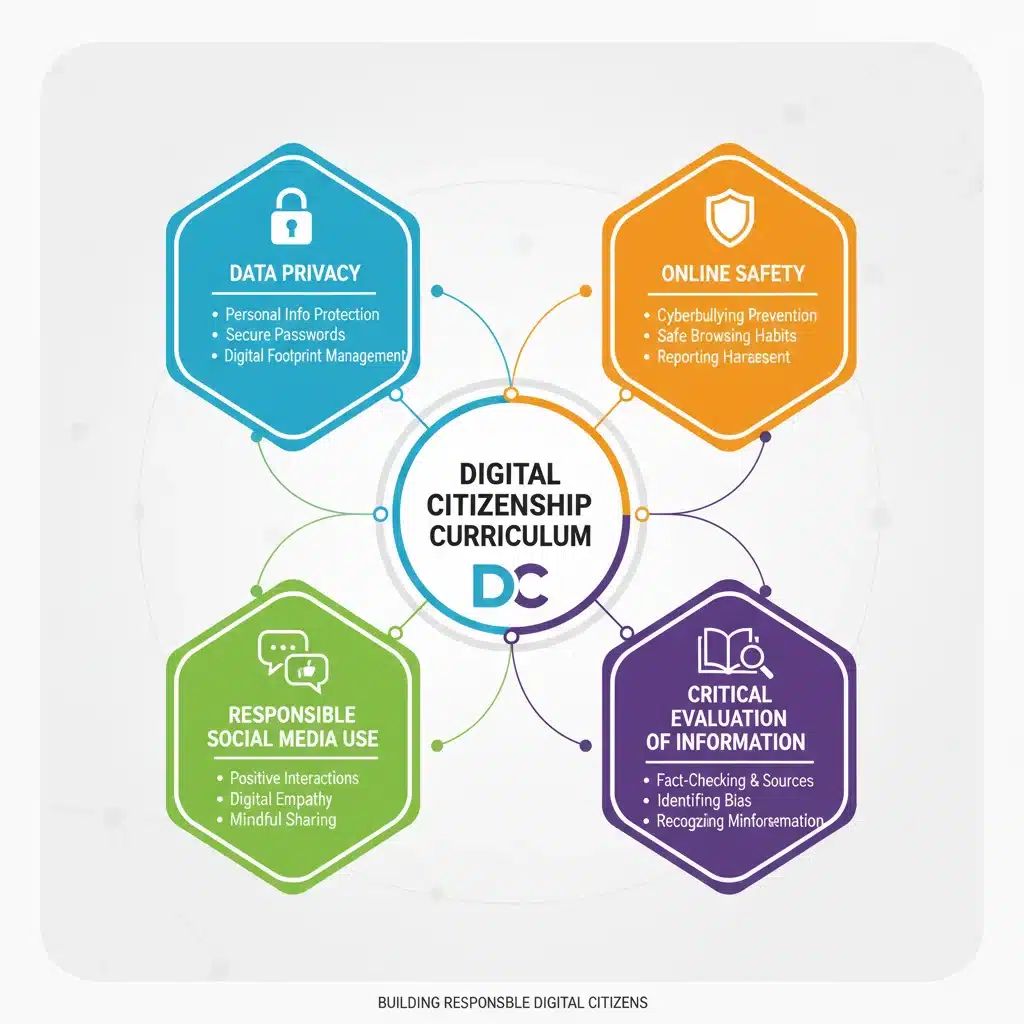
1. Digital Citizenship and Ethics
This pillar is arguably the most critical. As students spend more time online, they must understand their rights and responsibilities as digital citizens. This includes:
- Online Safety and Cybersecurity: Teaching students how to protect their personal information, recognize phishing scams, understand password hygiene, and identify cyberbullying. This also extends to understanding the basics of network security and the importance of secure online practices.
- Data Privacy and Digital Footprint: Educating students about how their data is collected, used, and shared, and the long-term implications of their online activities. This involves understanding privacy settings on social media and other platforms, and making informed decisions about what information they share.
- Responsible Social Media Use: Moving beyond simply using social media to understanding its psychological effects, the spread of information, and the importance of respectful and empathetic online interactions. This includes lessons on digital etiquette and the potential consequences of online behavior.
- Intellectual Property and Copyright: Understanding the concepts of plagiarism, fair use, and respecting intellectual property in the digital realm, especially concerning content creation and sharing.
- Ethical AI and Automation: Introducing students to the ethical considerations surrounding artificial intelligence, machine learning, and automation, including bias in algorithms and the societal impact of these technologies.
2. Information Literacy and Critical Thinking in a Digital Age
The sheer volume of information available online necessitates strong critical thinking skills. This pillar focuses on:
- Evaluating Digital Sources: Teaching students how to assess the credibility, bias, and accuracy of online information from various sources, including news articles, social media posts, and academic papers. This involves techniques like lateral reading and fact-checking.
- Combating Misinformation and Disinformation: Equipping students with the tools to identify and understand the spread of false or misleading information, and how to verify facts. This is crucial for fostering an informed citizenry.
- Search Engine Optimization (SEO) and Algorithmic Bias: Helping students understand how search engines work, how information is prioritized, and the potential biases embedded in algorithms that shape their online experience.
- Synthesizing Information: Developing skills to gather information from multiple digital sources, synthesize it effectively, and present it coherently, whether in written, visual, or multimedia formats.
3. Digital Creation and Innovation
Moving beyond consumption, this pillar encourages students to be creators and innovators using digital tools:
- Computational Thinking and Coding Fundamentals: Introducing age-appropriate coding concepts and computational thinking skills (decomposition, pattern recognition, abstraction, algorithms) that foster problem-solving and logical reasoning. This doesn’t necessarily mean every student becomes a programmer, but rather understands the logic behind digital systems.
- Multimedia Production: Developing skills in creating digital content such as videos, podcasts, presentations, and graphic designs using various software and platforms. This encourages creative expression and effective communication.
- Digital Collaboration Tools: Proficiency in using collaborative platforms (e.g., Google Workspace, Microsoft 365, project management tools) for group projects, communication, and shared document creation. This mirrors modern workplace environments.
- Understanding Emerging Technologies: Providing an introductory understanding of technologies like virtual reality (VR), augmented reality (AR), blockchain, and the Internet of Things (IoT), and their potential applications and societal impacts.

4. Technology Operations and Concepts
While often seen as foundational, this pillar needs continuous updating to reflect current technologies:
- Hardware and Software Fundamentals: A deeper understanding of how computers and networks function, including basic troubleshooting and system maintenance. This goes beyond simply knowing how to turn a device on.
- Cloud Computing Concepts: Understanding the basics of cloud storage, cloud applications, and the implications for data access and security.
- Productivity Software Proficiency: Advanced skills in word processing, spreadsheets, presentation software, and database management, focusing on efficiency and advanced features relevant to academic and professional tasks.
Implementation Strategies for 2026-2027
Implementing these significant updates to Digital Literacy Education requires a multi-faceted approach involving educators, administrators, policymakers, and the community:
Professional Development for Educators
Teachers are at the forefront of delivering this curriculum. Comprehensive and ongoing professional development is essential to ensure they are proficient in both the technical aspects of digital literacy and the pedagogical strategies for teaching it effectively. This includes training on new tools, understanding emerging digital trends, and developing engaging lesson plans that foster critical thinking and creativity. Professional learning communities can also provide a supportive environment for teachers to share best practices and troubleshoot challenges.
Curriculum Integration Across Disciplines
Rather than treating digital literacy as a standalone subject, it should be integrated across all academic disciplines. For example, students can use digital tools to analyze historical data in social studies, create scientific simulations, design presentations for English class, or develop digital portfolios for art. This interdisciplinary approach reinforces skills and demonstrates the real-world applicability of Digital Literacy Education.
Resource Allocation and Equitable Access
Ensuring all students have access to appropriate technology, reliable internet, and up-to-date software is paramount. This requires significant investment from school districts and potentially state and federal funding. Strategies to bridge the digital divide, such as providing devices for home use or establishing community tech hubs, will be crucial. Furthermore, schools must invest in robust IT infrastructure to support digital learning environments.
Assessment and Evaluation
Traditional assessment methods may not fully capture the breadth of digital literacy skills. New assessment strategies should include project-based learning, digital portfolios, performance-based tasks, and authentic assessments that evaluate students’ ability to apply digital skills in real-world contexts. This also involves assessing their critical thinking, ethical reasoning, and problem-solving abilities within digital environments.
Partnerships with Industry and Community
Collaborating with technology companies, local businesses, and community organizations can provide valuable resources, mentorship opportunities, and real-world projects for students. Guest speakers from the tech industry can inspire students and provide insights into career pathways. These partnerships can also help keep the curriculum relevant and aligned with industry needs.
Addressing Challenges and Future-Proofing the Curriculum
The journey to enhanced Digital Literacy Education is not without its challenges. Rapid technological change means that curriculum development must be agile and responsive. Schools need mechanisms for continuous review and updating of content to ensure relevance. This might involve establishing dedicated curriculum review committees that meet regularly to assess emerging technologies and societal trends.
Another significant challenge is ensuring that the curriculum remains inclusive and addresses the diverse learning needs of all students. This includes providing accommodations for students with disabilities and developing culturally responsive teaching materials that reflect the diverse backgrounds of the student population. The goal is to ensure that every student has the opportunity to develop strong digital literacy skills.
Furthermore, balancing screen time with other forms of learning and development is an ongoing discussion. While digital tools are essential, a holistic education still values critical thinking, creativity, and social-emotional learning that can also be fostered through non-digital means. The curriculum should promote healthy digital habits and encourage a balanced approach to technology use.
The Role of AI in Digital Literacy Education
The emergence and rapid advancement of artificial intelligence (AI) tools will profoundly impact Digital Literacy Education in the coming years. For the 2026-2027 academic year, it’s not enough to merely acknowledge AI; students must be taught to interact with it critically and ethically. This means:
- Understanding AI Fundamentals: Basic concepts of how AI works, including machine learning, algorithms, and data input. This demystifies AI and helps students understand its capabilities and limitations.
- Ethical Use of AI Tools: Discussing the responsible and ethical application of AI in academic work, content creation, and problem-solving. This includes understanding potential biases in AI outputs and the importance of human oversight.
- AI as a Productivity Tool: Teaching students how to effectively use AI tools (e.g., AI assistants, generative AI for brainstorming or drafting) to enhance their learning, research, and creative processes, while also understanding their limitations and the need for human verification.
- AI and Future Careers: Exploring the impact of AI on various industries and future job markets, helping students understand how AI skills will be increasingly valuable.
Integrating AI literacy into the curriculum is not about replacing human intelligence but about augmenting it. It’s about empowering students to leverage AI effectively while maintaining their critical thinking and creative independence. This will be a continually evolving area, requiring flexible and responsive curriculum frameworks.
Conclusion: Preparing for a Digitally Empowered Future
The 2026-2027 academic year represents a critical opportunity to redefine and strengthen Digital Literacy Education in US schools. By focusing on digital citizenship, critical information literacy, creative digital production, and a foundational understanding of technology, we can prepare students not just for the jobs of tomorrow, but for active, responsible, and fulfilling lives in an increasingly digital world. This requires a concerted effort from all stakeholders – educators, administrators, parents, and policymakers – to invest in the resources, training, and curriculum development necessary to achieve this vital goal. The future success of our students depends on our ability to adapt and innovate in the realm of digital education.
As technology continues its inexorable march forward, our commitment to providing comprehensive and dynamic Digital Literacy Education must remain unwavering. It’s an investment in the intellectual capital of our nation and a testament to our dedication to fostering a generation that is not only proficient with technology but also wise in its application and ethical in its impact.