The Future of US Workforce Development: 6 Key Educational Programs for 2026 and Beyond
The landscape of the US workforce is in a constant state of flux, driven by rapid technological advancements, evolving global economies, and shifting societal demands. As we inch closer to 2026 and look further into the future, the need for robust and adaptive US workforce development programs becomes more critical than ever. The skills that were valuable yesterday may be obsolete tomorrow, making continuous learning and reskilling essential for both individuals and the nation’s economic prosperity. This article explores six pivotal educational programs that are set to shape the future of the American labor market, ensuring that the workforce remains competitive, innovative, and resilient.
Anúncios
Understanding the trajectory of the US economy requires foresight into the skills that will be most in demand. Automation, artificial intelligence, and digitalization are not just buzzwords; they are transformative forces that are redefining job roles and creating entirely new industries. Consequently, traditional educational models are being challenged to adapt, giving rise to specialized programs designed to address these emerging needs. The goal is not merely to fill existing job vacancies but to cultivate a workforce capable of driving future innovation and economic growth. Effective US workforce development strategies must be proactive, anticipating future demands rather than merely reacting to current shortages.
From foundational digital literacy to highly specialized technical expertise, the spectrum of required skills is broad. Beyond technical proficiencies, ‘soft skills’ such as critical thinking, problem-solving, adaptability, and emotional intelligence are increasingly recognized as indispensable. These human-centric skills are often what differentiate human workers from automated systems, making them crucial for navigating complex work environments and fostering collaborative success. The programs highlighted below aim to integrate both technical and soft skill development, providing a holistic approach to preparing the workforce for the challenges and opportunities ahead.
1. Advanced Digital Literacy and Cybersecurity Training
In an increasingly digital world, a fundamental understanding of digital tools and robust cybersecurity practices is no longer optional but a prerequisite for nearly every profession. The pervasive nature of technology means that even roles traditionally considered non-technical now require a degree of digital fluency. From data entry and online collaboration to understanding cloud-based platforms and managing digital assets, digital literacy forms the bedrock of modern employment. For US workforce development, ensuring a digitally literate populace is paramount.
Beyond basic digital skills, the escalating threat of cyberattacks necessitates widespread cybersecurity awareness and specialized training. Businesses of all sizes are vulnerable, and the economic impact of data breaches can be catastrophic. Programs focused on cybersecurity are designed to equip individuals with the knowledge to protect sensitive information, identify threats, and implement preventative measures. This includes everything from understanding phishing scams and secure browsing habits for the general workforce to advanced ethical hacking, incident response, and network security for IT professionals. These programs are vital for safeguarding national infrastructure and economic stability.
These educational initiatives often take various forms: online courses, bootcamps, certificate programs, and integrated curricula within higher education. They emphasize practical, hands-on experience, often utilizing simulated environments to provide real-world training without risk. The demand for cybersecurity professionals far outstrips supply, making this a critical area for investment in US workforce development. Furthermore, incorporating basic cybersecurity principles into general education ensures that the entire workforce is better prepared to navigate the digital landscape securely.
2. AI and Machine Learning Specializations
Artificial Intelligence (AI) and Machine Learning (ML) are perhaps the most transformative technologies of our era, poised to revolutionize industries from healthcare and finance to manufacturing and entertainment. The ability to develop, implement, and manage AI systems will be a cornerstone of future economic competitiveness. Educational programs in AI and ML are therefore crucial for fostering innovation and maintaining leadership in these rapidly evolving fields. These specializations are not just for computer scientists; professionals across various disciplines will need to understand how to leverage AI tools and interpret AI-driven insights.
These programs typically cover a wide range of topics, including data science fundamentals, statistical modeling, algorithm development, neural networks, deep learning, and natural language processing. They often involve extensive coding in languages like Python and R, along with practical projects that allow students to build and deploy AI models. The focus is on both theoretical understanding and practical application, preparing graduates for roles as AI engineers, data scientists, machine learning specialists, and AI product managers. The growth in these areas presents significant opportunities for US workforce development.
Moreover, ethical considerations surrounding AI are becoming increasingly important. Responsible AI development, bias detection, and ensuring fairness in algorithmic decision-making are critical components of advanced AI education. Future AI professionals will need to be equipped not only with technical prowess but also with a strong ethical framework. Investing in these specialized programs will ensure that the US workforce is at the forefront of AI innovation, driving advancements while addressing potential societal impacts responsibly.
3. Renewable Energy and Green Technology Training
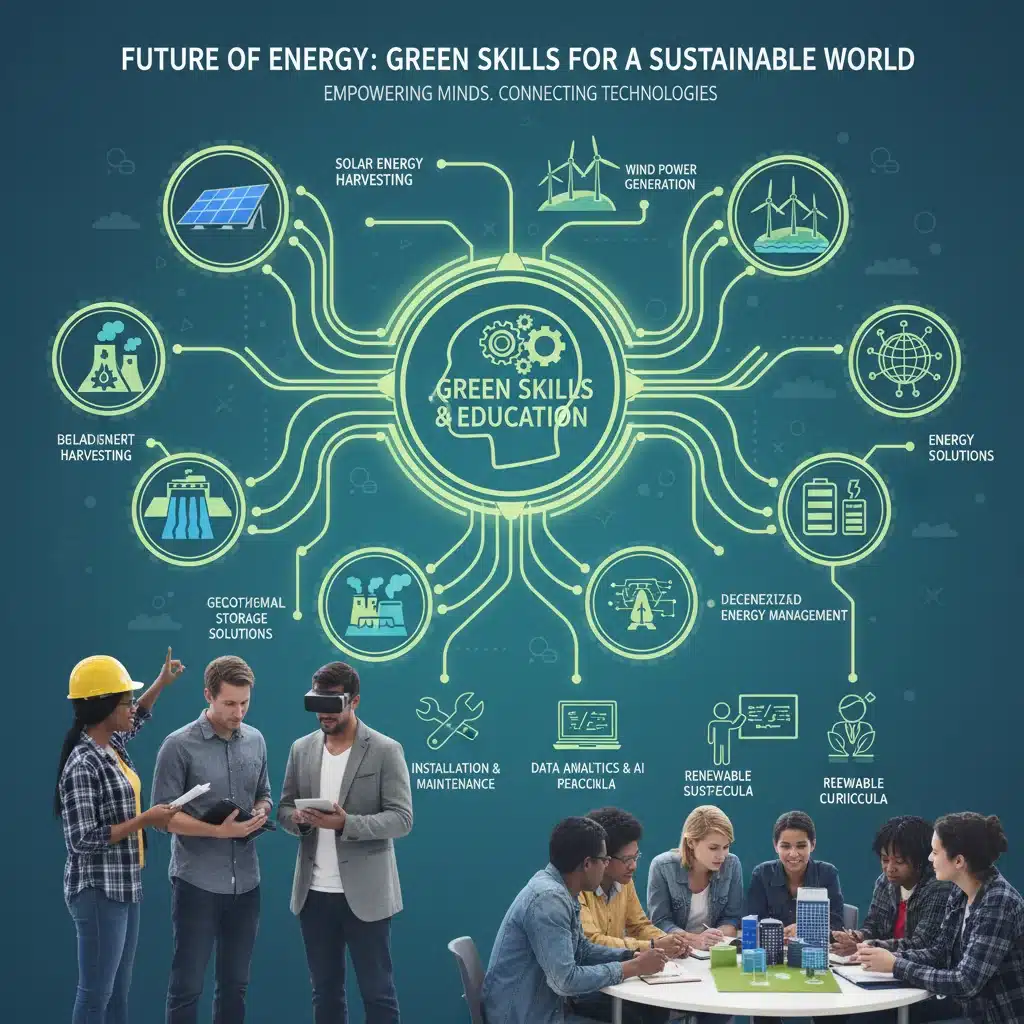
The global shift towards sustainability and renewable energy sources is creating a burgeoning new sector that demands a specialized workforce. As climate change concerns intensify and policies promote greener alternatives, the demand for professionals skilled in solar, wind, geothermal, and other sustainable technologies is skyrocketing. Educational programs in renewable energy and green technology are vital for building a workforce capable of designing, installing, maintaining, and innovating these essential systems. This represents a significant avenue for US workforce development and job creation.
These programs encompass a broad array of disciplines, from engineering and project management to skilled trades and environmental policy. For instance, technicians are needed to install and maintain solar panels and wind turbines, while engineers are required to design more efficient energy systems and storage solutions. Furthermore, urban planners and policy makers need expertise in sustainable development and energy efficiency. Educational offerings range from vocational certifications for specific trades to advanced degrees in renewable energy engineering and environmental science.
The growth of the green economy offers a unique opportunity for economic revitalization and job creation across various skill levels. By investing in training for green jobs, the US can not only address climate change but also foster new industries and secure a competitive edge in global markets. These programs often include hands-on training with actual equipment, internships with renewable energy companies, and modules on energy efficiency, smart grids, and sustainable resource management. This concerted effort in green skill development is crucial for the future of US workforce development.
4. Advanced Manufacturing and Robotics
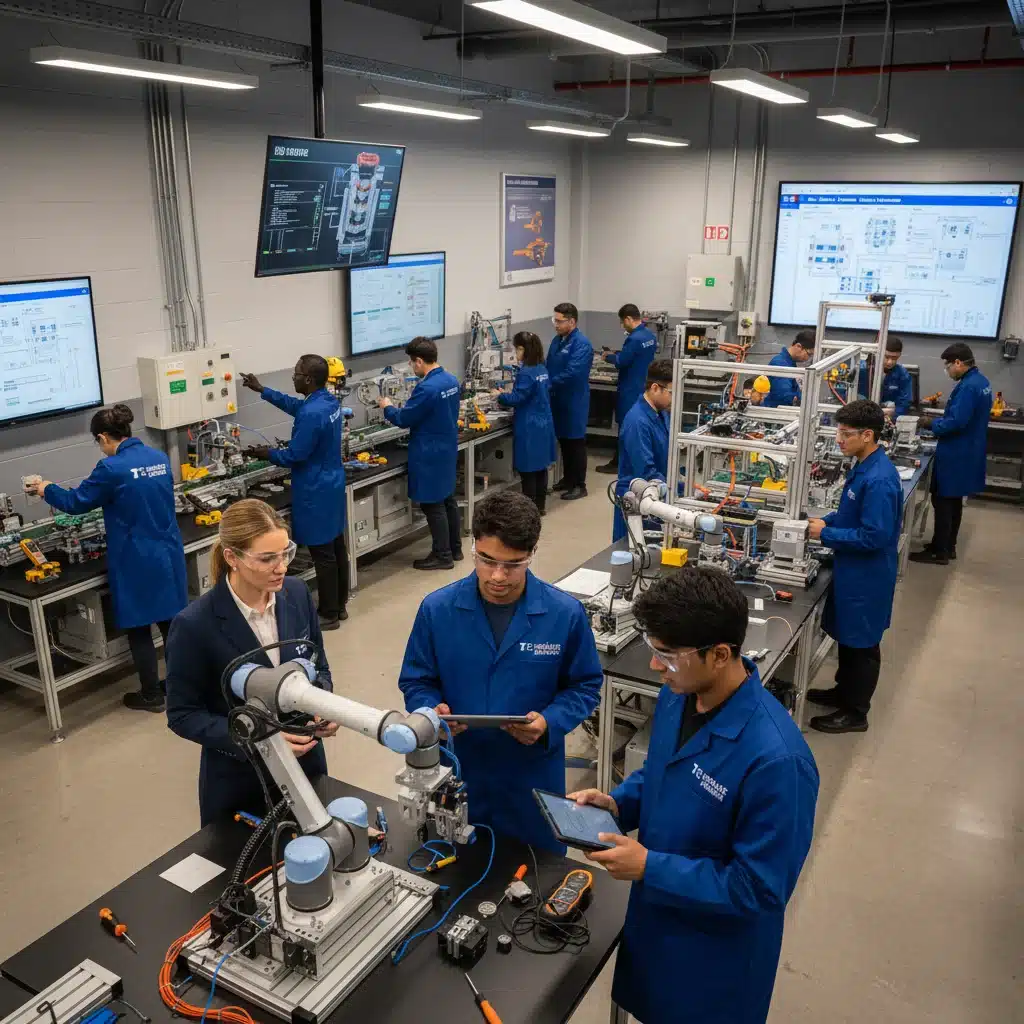
The manufacturing sector in the US is undergoing a significant transformation, moving from traditional labor-intensive processes to highly automated, technology-driven operations. Advanced manufacturing, characterized by the integration of robotics, automation, 3D printing, and smart factory technologies, requires a workforce with a sophisticated skill set. Programs focused on advanced manufacturing and robotics are essential for preparing individuals to operate, program, and maintain these complex systems, ensuring the US remains a leader in industrial production. This is a critical component of modern US workforce development.
These educational initiatives often blend engineering principles with practical, hands-on training. Students learn about industrial control systems, mechatronics, robotic programming, computer-aided design (CAD), and computer-aided manufacturing (CAM). They gain experience with programmable logic controllers (PLCs), sensor technologies, and data analytics for optimizing production processes. Vocational schools, community colleges, and universities are all playing a role in delivering these programs, often in partnership with manufacturing companies to ensure curricula are aligned with industry needs.
The resurgence of American manufacturing depends heavily on a skilled workforce capable of adapting to new technologies. Investing in advanced manufacturing and robotics training not only creates high-paying jobs but also enhances national security by strengthening domestic supply chains. These programs are designed to fill the skill gap that currently exists between traditional manufacturing workers and the demands of the modern factory floor, providing a pathway for career advancement and innovation within the sector. The focus on practical application and problem-solving is key to successful US workforce development in this area.
5. Healthcare Technology and Telemedicine Training
The healthcare industry is experiencing unprecedented technological integration, from electronic health records (EHR) and diagnostic imaging to telemedicine and AI-driven personalized medicine. The COVID-19 pandemic significantly accelerated the adoption of telemedicine, highlighting the need for healthcare professionals to be proficient in digital health platforms and remote patient care. Educational programs in healthcare technology and telemedicine are vital for preparing the next generation of healthcare workers to navigate this technologically advanced environment. This is a rapidly expanding area for US workforce development.
These programs educate individuals on the effective use of health information systems, medical devices, and communication technologies for delivering care. They cover topics such as data privacy and security (HIPAA compliance), telehealth etiquette, remote monitoring technologies, and the integration of AI in diagnostics and treatment planning. Training is not limited to clinicians; it extends to IT professionals specializing in healthcare systems, biomedical engineers, and administrative staff who manage digital health infrastructure. The goal is to improve access to care, enhance efficiency, and reduce costs through technological innovation.
Given the aging population and the increasing complexity of medical treatments, the demand for skilled healthcare professionals who are also tech-savvy will only grow. These programs offer a blend of clinical knowledge and technological expertise, ensuring that healthcare providers can leverage digital tools to deliver high-quality, patient-centered care. From virtual consultations to managing wearable health devices, the future of healthcare is undeniably digital, making these training programs indispensable for future US workforce development in the health sector.
6. Data Analytics and Business Intelligence
In today’s data-rich world, the ability to collect, analyze, and interpret vast amounts of information is a critical skill across virtually all industries. Data analytics and business intelligence programs are designed to equip individuals with the tools and methodologies to transform raw data into actionable insights, driving strategic decision-making and competitive advantage. As businesses increasingly rely on data-driven approaches, the demand for skilled data analysts, business intelligence specialists, and data scientists continues to surge. This area is fundamental to modern US workforce development.
These educational offerings typically cover statistical analysis, data visualization, database management (SQL), programming languages like Python and R for data manipulation, and specialized software tools such as Tableau, Power BI, and Excel for advanced analytics. Students learn how to clean, process, and model data, identify trends, predict future outcomes, and communicate their findings effectively to stakeholders. The applications are diverse, ranging from optimizing marketing campaigns and improving operational efficiency to predicting consumer behavior and enhancing product development.
The insights derived from data analytics can inform everything from supply chain management to customer relationship strategies, making it an invaluable skill set for almost any organization. As data continues to proliferate, the need for professionals who can make sense of it will only intensify. These programs are offered at various levels, from certifications and bootcamps for rapid skill acquisition to undergraduate and graduate degrees for in-depth expertise. By fostering a data-literate workforce, the US can ensure its businesses remain agile, innovative, and competitive in the global marketplace, solidifying this as a key pillar of US workforce development.
The Broader Impact on US Workforce Development
The six educational programs outlined above are not isolated initiatives; they are interconnected components of a comprehensive strategy for US workforce development. Investing in these areas yields benefits far beyond individual career advancement. A highly skilled and adaptable workforce is the engine of economic growth, fostering innovation, attracting investment, and enhancing national productivity. By proactively addressing skill gaps and preparing for future job demands, the US can maintain its global competitive edge.
Furthermore, these programs contribute to greater economic equity by providing pathways to well-paying jobs for individuals from diverse backgrounds. Accessibility to high-quality education and training, regardless of socioeconomic status, is crucial for building an inclusive workforce. Many of these programs are being offered through community colleges, vocational schools, and online platforms, making them more attainable for a broader segment of the population. Government initiatives, private sector partnerships, and non-profit organizations are also playing significant roles in funding and promoting these critical educational pathways.
The emphasis on lifelong learning is also paramount. As technology continues its relentless march forward, the concept of a static career path is becoming obsolete. Professionals will need to continually update their skills, acquire new knowledge, and adapt to emerging tools and methodologies. The educational infrastructure must support this continuous learning model, offering micro-credentials, short courses, and flexible learning options that allow individuals to reskill and upskill throughout their careers. This adaptability is the hallmark of a resilient US workforce development strategy.
Conclusion: Building a Future-Ready US Workforce
The future of the US workforce is bright, but it requires strategic investment and a forward-thinking approach to education and training. The six key educational programs – Advanced Digital Literacy and Cybersecurity, AI and Machine Learning Specializations, Renewable Energy and Green Technology, Advanced Manufacturing and Robotics, Healthcare Technology and Telemedicine, and Data Analytics and Business Intelligence – represent critical pathways to preparing individuals for the jobs of 2026 and beyond. These programs are not just about acquiring technical skills; they are about fostering adaptability, critical thinking, and problem-solving abilities that are essential in an ever-changing world.
By prioritizing these areas in US workforce development, stakeholders including government, educational institutions, and industry can collaborate to create a robust ecosystem of learning and opportunity. This collaborative effort will ensure that the American workforce remains at the forefront of innovation, driving economic prosperity and securing a competitive advantage in the global arena. The commitment to continuous learning and skill development is not just an investment in individuals; it is an investment in the nation’s future.
The journey to a future-ready workforce is ongoing, demanding constant evaluation and adaptation of educational strategies. As new technologies emerge and industries evolve, the programs we offer must evolve with them. By embracing these key educational initiatives, the US can empower its workforce to meet the challenges and seize the opportunities of tomorrow, ensuring sustained growth and a thriving economy for decades to come. The emphasis on practical, relevant, and future-oriented education is the bedrock upon which successful US workforce development will be built.