Mastering FAFSA Changes 2026: Your Essential Financial Aid Guide

Anúncios
Navigating the New FAFSA Changes for 2026: A Step-by-Step Guide for Maximizing Financial Aid Eligibility
The landscape of federal student aid is undergoing its most significant transformation in decades. For students and families planning for the 2026-2027 academic year and beyond, understanding the FAFSA Changes 2026 is not just recommended, it’s essential. The FAFSA Simplification Act, enacted by Congress, aims to streamline the application process, expand eligibility for federal student aid, and provide a more accurate assessment of a student’s financial need. However, with simplification often comes new complexities that require careful attention. This comprehensive guide will walk you through everything you need to know about the FAFSA Changes 2026, ensuring you are well-prepared to maximize your financial aid eligibility.
Anúncios
Understanding the FAFSA Simplification Act: Why the FAFSA Changes 2026 Matter
The FAFSA Simplification Act represents a monumental shift in how federal student aid is calculated and distributed. This legislation was designed to make the Free Application for Federal Student Aid (FAFSA) process easier for students and families, reduce barriers to accessing financial aid, and provide a more equitable approach to determining eligibility. The changes, which began phasing in with the 2024-2025 FAFSA cycle, will be fully implemented for the 2026-2027 academic year, making the FAFSA Changes 2026 a critical topic for prospective college students and their parents.
Key Objectives of the FAFSA Simplification Act
- Streamlined Application: The FAFSA form itself has been significantly shortened, reducing the number of questions and making it more user-friendly.
- Expanded Eligibility: More students are expected to qualify for federal Pell Grants due to changes in the eligibility formula.
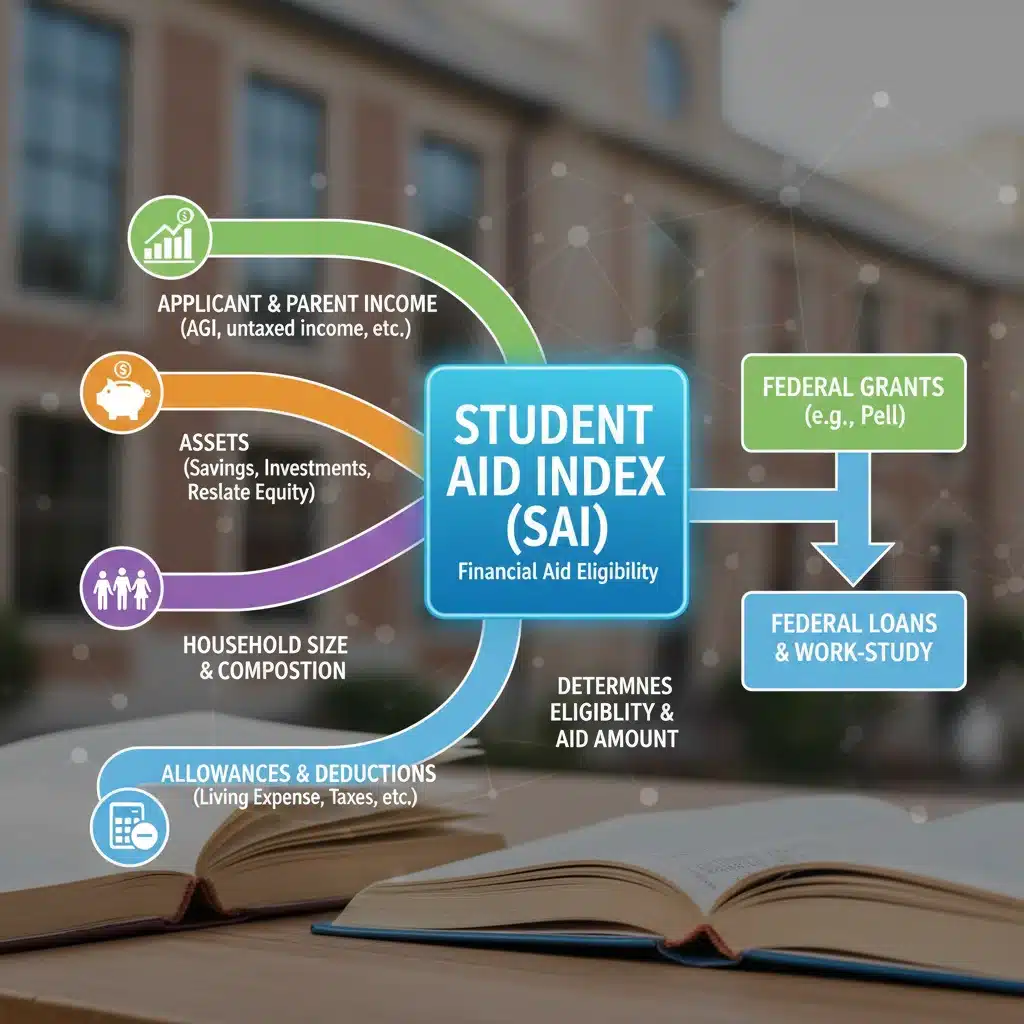
- New Needs Analysis: The Expected Family Contribution (EFC) has been replaced with the Student Aid Index (SAI), a new measure for determining financial need.
- Data Sharing: A direct data exchange with the IRS will simplify income reporting for most applicants.
- Changes for Divorced/Separated Parents: New rules dictate which parent’s information should be reported on the FAFSA.
These objectives are all aimed at making college more accessible and affordable. However, while the intent is clear, the practical application of these FAFSA Changes 2026 requires careful attention to detail. Families must understand how their specific financial situation will be viewed under the new rules to effectively plan for college costs.
From EFC to SAI: Demystifying the Student Aid Index (SAI) for FAFSA Changes 2026
Perhaps the most significant of the FAFSA Changes 2026 is the replacement of the Expected Family Contribution (EFC) with the Student Aid Index (SAI). The EFC was often a source of confusion, as it didn’t necessarily represent the amount a family would actually pay. The SAI aims to be a more transparent and understandable index.
What is the Student Aid Index (SAI)?
The SAI is an eligibility index number that a college’s financial aid office uses to determine how much federal student aid a student is eligible to receive. It can be a negative number, down to -1500, indicating a higher level of financial need. A lower SAI generally means more financial aid eligibility.
Key Differences Between EFC and SAI:
- Number of Children in College: Under the EFC, having multiple children in college simultaneously reduced the EFC per student. The SAI calculation eliminates this benefit. This is one of the most impactful FAFSA Changes 2026 for families with multiple children pursuing higher education.
- Income Protection Allowance (IPA): The IPA, which shields a portion of income from being considered available for college costs, has increased under the new rules, potentially leading to lower SAIs for some families.
- Child Support: Child support received will now be reported as an asset, not as untaxed income, which could affect some families’ SAI.
- Small Business/Farm Exclusion: Previously, small businesses and family farms with fewer than 100 full-time employees were excluded from asset calculations. This exclusion has been removed, meaning these assets will now be counted in the SAI calculation, which is a significant factor in the FAFSA Changes 2026.
- Negative SAI: As mentioned, the SAI can be negative, allowing for greater recognition of significant financial need.
Understanding these shifts is crucial. Families who previously benefited from the EFC’s treatment of multiple children in college or small business exclusions will need to adjust their expectations and financial planning strategies for the FAFSA Changes 2026.
Who is the ‘Contributor’ for FAFSA Changes 2026?
The FAFSA Simplification Act introduces the term ‘contributor,’ which refers to anyone required to provide information on the FAFSA, sign it, and consent to provide federal tax information. This primarily includes the student, and for dependent students, their parent(s) or stepparent(s). The definition of which parent is the ‘contributor’ has also changed significantly with the FAFSA Changes 2026.
New Rules for Divorced or Separated Parents:
Under the old FAFSA, the parent with whom the student lived for the majority of the past 12 months was the one whose information was reported. With the FAFSA Changes 2026, the rule shifts to the parent who provides the most financial support to the student, regardless of where the student lives. If both parents provide equal support, or if that determination is unclear, the parent with the higher adjusted gross income (AGI) should be the one to complete the FAFSA.
This change can have a substantial impact on a student’s financial aid eligibility, as the financial circumstances of one parent might be vastly different from the other. It is vital for divorced or separated parents to communicate and understand this new requirement to ensure the FAFSA is completed accurately and to maximize aid opportunities under the FAFSA Changes 2026.
Simplifying the Application Process: Direct Data Exchange and FAFSA Changes 2026
One of the most welcome FAFSA Changes 2026 is the enhanced direct data exchange with the IRS. This feature, known as the Future Act Direct Data Exchange (FADDX), replaces the old IRS Data Retrieval Tool (DRT).
How FADDX Works:
Instead of manually transferring tax information or using a tool that pulls data, FADDX will directly retrieve tax information from the IRS once the applicant (and contributors, if applicable) provides consent. This is a mandatory step for most applicants. If consent is not provided, the student will not be eligible for federal student aid.
This direct data exchange aims to reduce errors, simplify the application process, and prevent fraud. It means less manual entry for families and a more accurate and efficient determination of eligibility. However, ensuring all contributors provide consent promptly is key to avoiding delays in processing your FAFSA and receiving aid under the FAFSA Changes 2026.
Maximizing Your Financial Aid: Strategies for the FAFSA Changes 2026
With the significant FAFSA Changes 2026, proactive planning and strategic thinking are more important than ever. Here are actionable steps families can take to maximize their financial aid eligibility:
1. Understand Your New SAI:
Familiarize yourself with the SAI calculation methodology. Use online calculators or consult with a financial aid advisor to get an estimate of your potential SAI. Knowing this number early can help you understand your likely aid eligibility and plan accordingly for the FAFSA Changes 2026.
2. Strategic Asset Management:
The FAFSA considers certain assets in its calculation. While it’s generally not advisable to make drastic financial decisions solely for financial aid, understanding how assets are treated can inform your long-term planning. For example:
- Retirement Accounts: Funds in qualified retirement accounts (401(k)s, IRAs) are generally not counted as assets.
- 529 Plans: These plans, if owned by a dependent student or a parent, are reported as a parental asset, which has a lower impact on aid eligibility than student-owned assets. Grandparent-owned 529 plans will now count as parental assets once distributed to the student, which is a new consideration with the FAFSA Changes 2026.
- Savings Accounts: Liquid savings are considered. If you have significant savings, consider how they might impact your SAI.
- Small Business/Farm Assets: As noted, these are now counted. If you own a small business or farm, understand how its value will be assessed.
3. Income Planning:
The FAFSA uses income information from two years prior to the application year (the ‘prior-prior year’). For the 2026-2027 FAFSA, your 2024 tax information will be used. If you anticipate a significant decrease in income due to job loss, divorce, or other special circumstances, you may be able to appeal your financial aid award with your college’s financial aid office. This is crucial for navigating the FAFSA Changes 2026 effectively.
4. Timely Application:
Always submit your FAFSA as early as possible. While federal aid generally operates on a first-come, first-served basis for some programs, many state and institutional aid programs have strict deadlines. The FAFSA typically opens on October 1st each year (though the 2024-2025 FAFSA was delayed). Mark your calendar for the 2026-2027 FAFSA opening date to ensure you don’t miss out on any opportunities due to the FAFSA Changes 2026.
5. Communicate with Divorced/Separated Parents:
If your parents are divorced or separated, ensure clear communication about which parent will be the ‘contributor’ under the new rules. This decision can significantly impact your aid eligibility and should be made strategically in light of the FAFSA Changes 2026.
6. Explore Other Aid Opportunities:
Federal aid is just one piece of the puzzle. Continue to research state grants, institutional scholarships, and private scholarships. Many of these have separate applications and deadlines. The FAFSA Changes 2026 primarily affect federal aid, so diversifying your aid search remains a critical strategy.

Special Circumstances and Professional Judgment with FAFSA Changes 2026
Life is unpredictable, and sometimes your financial situation changes drastically after you’ve filed your FAFSA. The FAFSA Simplification Act, and the FAFSA Changes 2026 by extension, still allow for ‘professional judgment’ by financial aid administrators. This means if you or your family experience significant financial hardship not reflected on your FAFSA (which uses prior-prior year income), you can appeal to your college’s financial aid office.
Examples of Special Circumstances:
- Loss of employment or significant reduction in income.
- High unreimbursed medical expenses.
- Death or divorce of a parent (or student’s spouse).
- Unusual dependent care expenses.
- Natural disaster impacting financial resources.
If you have a special circumstance, gather documentation to support your claim (e.g., layoff notice, medical bills, divorce decree) and contact the financial aid office at each school you are applying to. They can review your situation and potentially adjust your SAI, leading to increased aid eligibility, even with the new FAFSA Changes 2026.
Preparing Your Documents for the 2026-2027 FAFSA
Even with the streamlined process, you’ll still need specific documents to complete the FAFSA. Preparing these in advance will make the application process much smoother, especially as you adapt to the FAFSA Changes 2026.
Essential Documents:
- FSA ID: Both the student and one parent (for dependent students) will need an FSA ID. This is your username and password for federal student aid websites and acts as your legal signature. Create these well in advance if you don’t already have them.
- Social Security Numbers: For the student and all parents listed as contributors.
- Alien Registration Number: If you are not a U.S. citizen.
- Federal Tax Returns: For the ‘prior-prior year’ (2024 tax returns for the 2026-2027 FAFSA). While FADDX will pull most of this, having a copy for reference is wise.
- Records of Untaxed Income: Such as child support received (now an asset), interest income, and veterans’ noneducation benefits.
- Information on Assets: Current balances of cash, savings, and checking accounts, as well as the net worth of investments (stocks, bonds, real estate, etc.) and businesses/farms.
Having these documents organized and readily available will significantly speed up the FAFSA completion process, allowing you to focus on understanding the nuances of the FAFSA Changes 2026 rather than scrambling for information.
The Broader Impact of FAFSA Changes 2026 on College Access
The FAFSA Simplification Act, and the subsequent FAFSA Changes 2026, are intended to broaden access to higher education, particularly for low-income students. The expanded Pell Grant eligibility and the ability for the SAI to be a negative number are key components of this goal. By simplifying the application and making aid more accessible, the hope is that more students will pursue and complete postsecondary education.
However, the changes are not without potential downsides for some families. The elimination of the multi-child discount for the SAI calculation means that families with multiple children in college simultaneously may see a decrease in their federal aid eligibility compared to previous years. Similarly, the inclusion of small business and farm assets could impact families who previously had these assets excluded.
It’s crucial for every family to assess how these specific FAFSA Changes 2026 will affect their unique financial situation. Early planning, seeking advice from financial aid professionals, and utilizing the resources provided by the Department of Education will be essential for navigating this new landscape successfully.
Common Misconceptions About FAFSA Changes 2026
With such extensive revisions, it’s natural for misconceptions to arise. Addressing these can help families approach the FAFSA Changes 2026 with clarity.
- Myth: The FAFSA is only for low-income families.
Reality: While the FAFSA is critical for need-based aid, it’s also the gateway for federal student loans and some institutional scholarships, regardless of income. Every student should complete it. - Myth: My family makes too much money to qualify for aid.
Reality: Many factors beyond income determine aid eligibility. With the FAFSA Changes 2026 and the new SAI, more families might find themselves eligible for some form of aid. Always apply! - Myth: I don’t need to complete the FAFSA until I’m accepted into a college.
Reality: The FAFSA should be completed as soon as it opens (typically October 1st) for the academic year you’re applying for. Waiting can mean missing out on limited aid funds. - Myth: The FAFSA is too complicated to fill out.
Reality: The FAFSA Simplification Act aims to make the form much shorter and easier. With the FADDX, much of the financial data will be automatically transferred, reducing manual entry.