Top 5 EdTech Trends Shaping K-12 Education in the US by 2026
Anúncios
Anúncios
The 5 Most Impactful Education Technology Trends Transforming K-12 Learning in the US by 2026
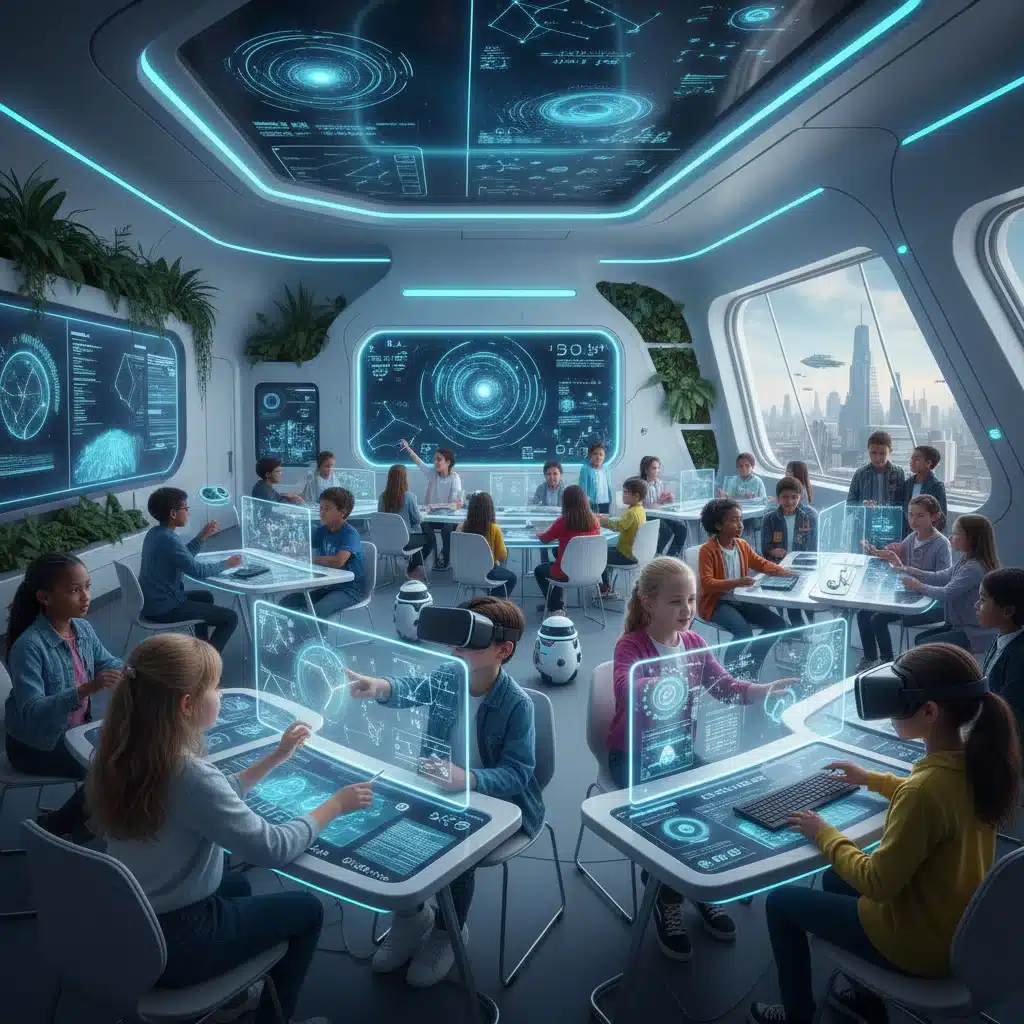
The landscape of K-12 education in the United States is in constant flux, driven by pedagogical advancements, societal changes, and, perhaps most significantly, the relentless march of technology. As we look towards 2026, the integration of education technology, or EdTech, is not just a supplement to traditional teaching methods but a fundamental pillar shaping how students learn, how teachers instruct, and how educational institutions operate. Understanding the pivotal K-12 EdTech Trends is crucial for educators, administrators, policymakers, and parents alike to prepare for the future of learning.
The past few years have accelerated the adoption of digital tools in classrooms, moving from experimental phases to essential components of daily instruction. This rapid evolution has highlighted the transformative potential of technology to personalize learning, enhance engagement, and bridge educational divides. However, it has also underscored the challenges related to equitable access, teacher training, and the ethical implications of data usage. As we delve into the top 5 most impactful K-12 EdTech Trends, we will explore not only the technologies themselves but also their potential to revolutionize learning outcomes and reshape the educational experience for millions of students across the nation.
From artificial intelligence that tailors content to individual student needs to immersive virtual realities that transport learners to distant lands or historical events, these trends represent more than just new gadgets; they embody a paradigm shift in educational philosophy. The goal is to create more dynamic, inclusive, and effective learning environments that prepare students for a rapidly changing world. Let’s embark on this journey to uncover the future of K-12 education through the lens of cutting-edge EdTech.
1. The Rise of Artificial Intelligence (AI) and Machine Learning (ML) in Personalized Learning
One of the most profound K-12 EdTech Trends set to redefine education by 2026 is the widespread integration of Artificial Intelligence (AI) and Machine Learning (ML). AI is no longer a futuristic concept but a practical tool already making significant inroads into classrooms, promising to revolutionize personalized learning on an unprecedented scale. The core benefit of AI in education lies in its ability to analyze vast amounts of data about student performance, learning styles, and engagement patterns to provide highly individualized educational experiences.
AI-powered adaptive learning platforms are at the forefront of this trend. These platforms can dynamically adjust the curriculum, pace, and teaching methods based on each student’s real-time progress and understanding. If a student struggles with a particular concept, the AI can offer additional resources, different explanations, or practice problems until mastery is achieved. Conversely, if a student quickly grasps a topic, the AI can present more challenging material, preventing boredom and fostering deeper engagement. This level of customization was once an ideal, largely unattainable in traditional classroom settings, but AI makes it a scalable reality.
Beyond adaptive learning, AI is also transforming assessment. Intelligent tutoring systems can provide immediate feedback on assignments, identifying common misconceptions and offering targeted interventions. Automated grading for certain types of assignments can free up valuable teacher time, allowing educators to focus more on complex tasks like one-on-one student support, curriculum development, and fostering critical thinking. AI tools can even help identify students who might be at risk of falling behind, allowing for proactive support and intervention before issues escalate.
Furthermore, AI-driven analytics provide educators and administrators with deeper insights into overall student performance and curriculum effectiveness. By identifying trends and patterns across student populations, schools can make data-informed decisions about resource allocation, professional development for teachers, and instructional strategies. This data-centric approach ensures that educational interventions are evidence-based and tailored to the specific needs of the school community.
However, the implementation of AI in K-12 education is not without its challenges. Concerns around data privacy, algorithmic bias, and the potential for over-reliance on technology need careful consideration. Ensuring equitable access to AI-powered tools, particularly in underserved communities, is also paramount. Ethical guidelines and robust data security protocols will be essential to harness the full potential of AI responsibly. Despite these challenges, the transformative power of AI to create truly personalized and effective learning pathways makes it one of the most compelling K-12 EdTech Trends for the coming years.
2. Immersive Learning Experiences: VR, AR, and Mixed Reality
The second major trend reshaping K-12 education is the advent of immersive learning experiences, powered by Virtual Reality (VR), Augmented Reality (AR), and Mixed Reality (MR). These technologies are moving beyond niche applications and into mainstream classrooms, offering unprecedented opportunities for engagement and experiential learning. By 2026, immersive tech will be a significant driver in making abstract concepts tangible and learning more memorable.
VR transports students into fully simulated environments, allowing them to explore historical sites, dissect virtual organs, or even travel to distant galaxies from the comfort of their classroom. Imagine a history lesson where students can walk through ancient Rome, or a biology class where they can navigate the human circulatory system in 3D. These experiences go far beyond what textbooks or even videos can offer, providing a sense of presence and interactivity that deepens understanding and retention.
AR, on the other hand, overlays digital information onto the real world. Students can use tablets or smartphones to view 3D models of molecules on their desks, interact with augmented textbooks that come to life with animations, or even see virtual labels appear over real-world objects during a field trip. AR enhances the physical environment, making learning more interactive and contextual. It bridges the gap between the digital and physical worlds, offering a versatile tool for various subjects.
Mixed Reality combines elements of both VR and AR, allowing users to interact with virtual objects in a real environment. This creates even more dynamic and collaborative learning scenarios, where students can work together on virtual projects that appear to exist in their physical space. For instance, students could collectively design a virtual city block that integrates with their classroom layout, fostering teamwork and problem-solving skills.
The benefits of immersive learning are manifold. It significantly boosts student engagement, making complex or dry subjects more exciting and accessible. It caters to different learning styles, particularly kinesthetic and visual learners, by providing hands-on (or virtual-hands-on) experiences. Furthermore, it allows for safe exploration of dangerous or inaccessible environments, from chemical reactions to deep-sea expeditions. 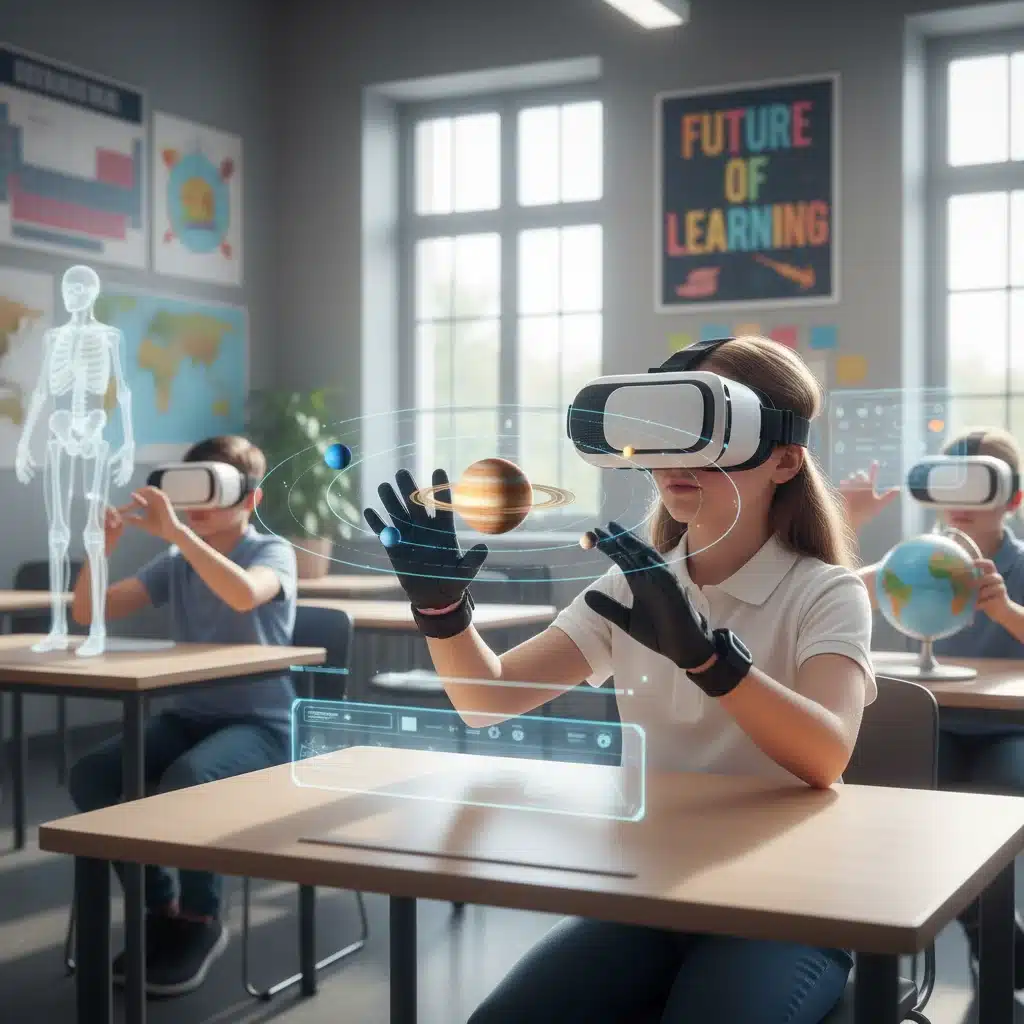
Challenges include the cost of hardware, the need for robust network infrastructure, and the development of high-quality educational content. Teacher training is also crucial to ensure educators can effectively integrate these tools into their pedagogy. However, as hardware becomes more affordable and content libraries expand, immersive learning is poised to become one of the most exciting and impactful K-12 EdTech Trends, transforming how students interact with knowledge and the world around them.
3. Enhanced Data Analytics for Targeted Intervention and Curriculum Optimization
The third crucial trend in K-12 EdTech Trends is the sophisticated use of data analytics to inform instructional practices, provide targeted interventions, and optimize curricula. While data has always been a part of education, modern EdTech leverages advanced analytics to collect, process, and interpret educational data with unprecedented depth and speed, moving beyond simple test scores to a holistic view of student progress.
Data analytics platforms can track a multitude of student interactions within digital learning environments: time spent on tasks, accuracy rates, types of errors, engagement with different content formats, and even emotional responses inferred through input patterns. This rich data stream provides educators with a granular understanding of individual student strengths and weaknesses, learning patterns, and areas where they might be struggling or excelling.
For targeted intervention, this means teachers can move from reactive measures to proactive support. Instead of waiting for a student to fail an exam, data analytics can flag early warning signs – perhaps a consistent struggle with a specific type of problem, decreased engagement with assignments, or a sudden drop in performance. This allows teachers to intervene promptly with personalized support, tutoring, or adjusted learning paths before academic difficulties become entrenched.
Beyond individual students, data analytics offers powerful insights for curriculum optimization. By analyzing aggregated data across classes, grades, or even entire districts, administrators and curriculum developers can identify which teaching methods are most effective, which learning materials yield the best results, and where the curriculum might have gaps or redundancies. This evidence-based approach ensures that educational programs are continuously refined and aligned with learning objectives and student needs. For example, if data shows that a particular unit consistently leads to high student confusion, educators can revise the content, introduce new resources, or experiment with different instructional strategies.
Furthermore, data analytics can help identify trends related to equity and access. By disaggregating data by demographics, schools can pinpoint disparities in performance or engagement among different student groups, allowing them to develop targeted strategies to address these inequities and ensure all students have the opportunity to succeed. This focus on equity is a critical aspect of responsible EdTech implementation.
The challenges associated with data analytics revolve primarily around data privacy and security. Schools must implement robust protocols to protect sensitive student information and adhere to strict regulatory compliance. Additionally, training educators to effectively interpret and utilize data insights is essential to avoid data overload and ensure that data-driven decisions truly benefit students. When implemented thoughtfully, enhanced data analytics stands as a cornerstone of effective and responsive K-12 education, making it a pivotal element among the evolving K-12 EdTech Trends.
4. Collaborative Learning Platforms and Digital Citizenship
The fourth significant development among K-12 EdTech Trends by 2026 is the growing emphasis on collaborative learning platforms coupled with the critical importance of digital citizenship. As education increasingly moves into digital spaces, fostering effective collaboration and ensuring responsible online behavior become paramount for student success and well-being.
Collaborative learning platforms, such as shared document editors, project management tools, and interactive whiteboards, empower students to work together on projects regardless of their physical location. These platforms facilitate real-time co-creation, peer feedback, and group problem-solving. Students can brainstorm ideas, write reports, create presentations, and even conduct scientific experiments virtually, mirroring the collaborative environments they will encounter in higher education and the modern workforce. This fosters essential 21st-century skills like communication, teamwork, and critical thinking.
Beyond specific tools, the philosophy of collaborative learning is evolving. EdTech is enabling new models of peer-to-peer learning, where students can teach each other, review each other’s work, and collectively construct knowledge. Discussion forums, video conferencing tools, and secure messaging systems within educational platforms facilitate constant communication and support, breaking down traditional classroom silos. This not only enhances academic outcomes but also builds a sense of community and shared responsibility among learners.
Hand-in-hand with collaborative learning is the imperative of digital citizenship. As students spend more time interacting online, it’s crucial to equip them with the knowledge and skills to navigate the digital world safely, ethically, and responsibly. Digital citizenship education covers a wide range of topics, including online safety, cyberbullying prevention, media literacy, digital etiquette, privacy and security, and the responsible use of digital tools.
Schools are increasingly integrating digital citizenship curricula to teach students how to evaluate online information critically, understand the permanence of their digital footprint, respect intellectual property, and engage in constructive online dialogue. This education is vital not only for protecting students from online risks but also for empowering them to be positive and productive digital citizens who contribute meaningfully to online communities. 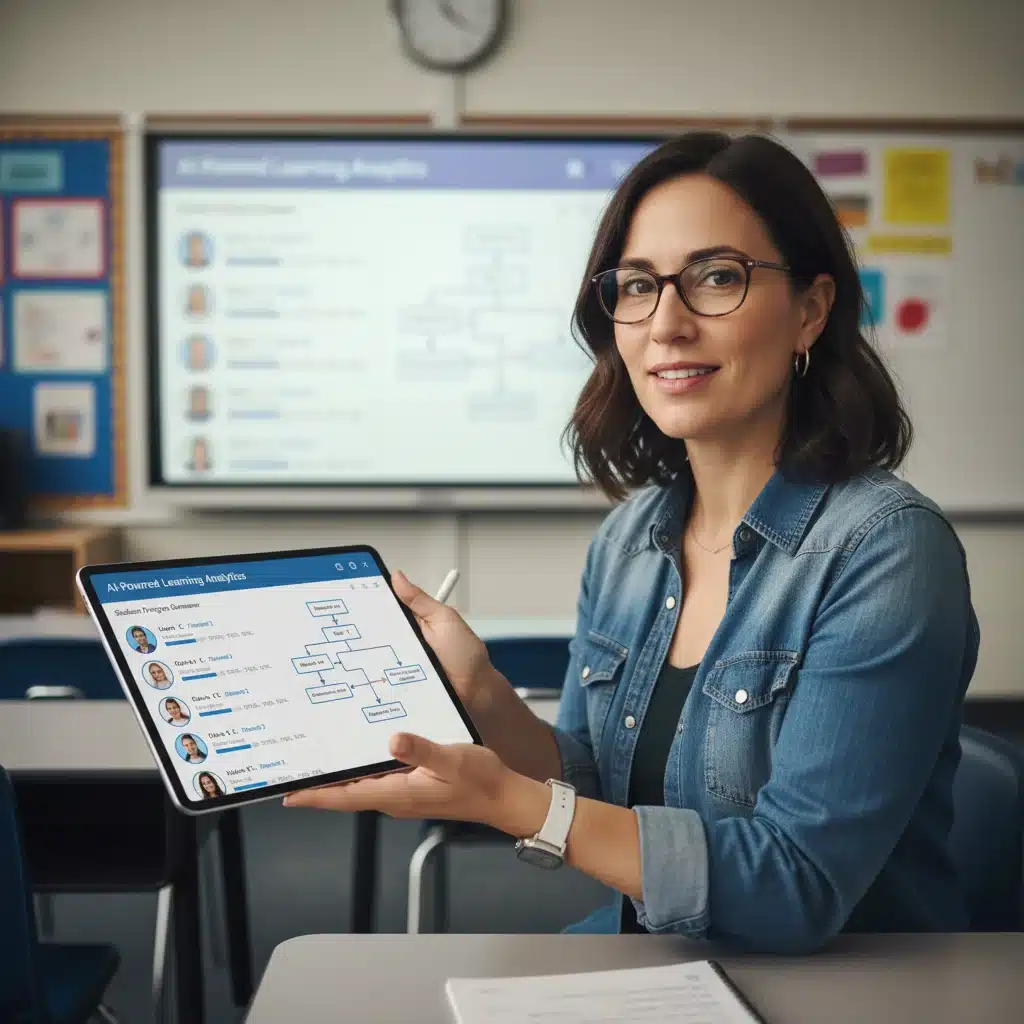
Challenges include ensuring equitable access to collaborative tools, managing student interactions in online spaces, and continuously updating digital citizenship curricula to keep pace with evolving technologies and online behaviors. However, by fostering strong collaborative skills and instilling a robust sense of digital citizenship, schools can prepare students not just academically, but also socially and ethically for a future dominated by digital interactions. This dual focus makes collaborative platforms and digital citizenship a critical component of the future K-12 EdTech Trends.
5. Flexible Learning Environments and Hybrid Models
The fifth and perhaps most encompassing of the K-12 EdTech Trends poised to make a lasting impact by 2026 is the widespread adoption and refinement of flexible learning environments and hybrid educational models. The experience of recent years has irrevocably shifted perceptions of where and how learning can occur, moving beyond the traditional four walls of the classroom to embrace a more fluid and adaptable approach.
Flexible learning environments leverage technology to support learning activities that can take place anywhere, anytime. This includes robust Learning Management Systems (LMS) that serve as central hubs for course content, assignments, and communication, accessible from any device. It also encompasses a variety of digital tools that support synchronous and asynchronous learning, allowing students to engage with material and peers at their own pace or in real-time, depending on the instructional design.
Hybrid learning models, specifically, combine elements of in-person instruction with online learning. This is not simply remote learning, but a thoughtfully designed integration where technology enhances both face-to-face interactions and independent study. For instance, students might engage with lectures or foundational content online before coming to class, freeing up in-person time for collaborative projects, discussions, and deeper problem-solving facilitated by the teacher. This ‘flipped classroom’ approach is a prime example of a hybrid model that maximizes the value of both physical and digital learning spaces.
The benefits of flexible and hybrid models are substantial. They offer increased accessibility for students who may face geographical barriers, health challenges, or scheduling conflicts. They promote student agency by allowing learners more control over their learning path and pace. For educators, these models can lead to more efficient use of class time, a richer array of instructional strategies, and the ability to reach a wider range of learning styles.
Moreover, these models build resilience within educational systems, allowing schools to adapt quickly to unforeseen disruptions while maintaining continuity of instruction. The ability to seamlessly transition between in-person and online learning, or to blend both, ensures that educational progress is not halted by external circumstances.
Implementing successful flexible and hybrid learning environments requires careful planning. Key considerations include ensuring equitable access to technology and reliable internet connectivity for all students, providing extensive professional development for teachers to master new pedagogical approaches, and designing engaging online content that complements in-person activities. Furthermore, maintaining student engagement and fostering a sense of community in a hybrid setting requires innovative strategies and consistent effort.
Despite these complexities, the flexibility and adaptability offered by these models make them indispensable for the future of K-12 education. They represent a fundamental shift towards a more resilient, inclusive, and student-centered educational system, solidifying their position as one of the most impactful K-12 EdTech Trends for 2026 and beyond.
Conclusion: Navigating the Future of K-12 Education with EdTech
As we have explored, the K-12 educational landscape in the US is on the cusp of a profound transformation, driven by five major K-12 EdTech Trends. Artificial Intelligence and Machine Learning are paving the way for truly personalized learning experiences, adapting to individual student needs and optimizing instructional delivery. Immersive technologies like VR, AR, and MR are making learning more engaging and experiential, transporting students beyond the confines of the classroom to explore new worlds and concepts.
Enhanced data analytics is empowering educators with unprecedented insights into student performance and curriculum effectiveness, enabling targeted interventions and continuous improvement. Collaborative learning platforms are fostering essential 21st-century skills such as teamwork and communication, while simultaneously emphasizing the critical importance of digital citizenship for responsible online engagement. Finally, flexible learning environments and hybrid models are reshaping the very structure of education, offering adaptability, accessibility, and student agency.
These trends are not isolated phenomena; rather, they are interconnected and mutually reinforcing, collectively pushing K-12 education towards a more dynamic, inclusive, and effective future. The integration of these technologies promises to create richer learning experiences, better prepare students for the challenges of tomorrow, and empower educators with more sophisticated tools than ever before.
However, realizing the full potential of these K-12 EdTech Trends requires careful consideration of the associated challenges. Issues of equitable access, robust teacher training, data privacy and security, and the ethical implications of advanced technologies must be addressed proactively and thoughtfully. It is imperative that all stakeholders – educators, parents, policymakers, and technology developers – collaborate to ensure that EdTech serves to enhance, rather than detract from, the fundamental goals of education: fostering critical thinking, creativity, and a lifelong love of learning.
By embracing these transformative K-12 EdTech Trends with foresight and commitment, the US education system can confidently navigate the complexities of the digital age, ensuring that every student has the opportunity to thrive and succeed in 2026 and well into the future. The journey ahead is exciting, filled with innovation and the promise of a brighter, more engaging educational experience for all.