Addressing the Looming Teacher Shortages in the US: Innovative Educational Strategies for 2026
The United States education system is at a critical juncture. Projections indicate a significant and worsening teacher shortage by 2026, threatening to undermine the quality of education for millions of students. This isn’t merely an inconvenience; it’s a profound challenge that demands immediate, innovative, and sustained action. The ripple effects of an understaffed teaching force extend far beyond the classroom, impacting student achievement, school morale, and the nation’s future economic competitiveness. Understanding the multifaceted causes of this impending crisis is the first step toward developing effective teacher shortage solutions.
From declining enrollment in teacher preparation programs to high attrition rates among seasoned educators, the factors contributing to the teacher shortage crisis are complex. Low salaries, demanding working conditions, lack of professional support, and a perceived decline in the profession’s prestige all play a role. However, despair is not an option. This article will delve into a comprehensive array of innovative educational strategies and proactive policy reforms designed to attract, train, and retain a high-quality teaching workforce, ensuring that by 2026, every student has access to excellent educators. We will explore how a combination of systemic changes, technological integration, and community engagement can transform the landscape of teaching in America.
The Alarming Reality: Understanding the Teacher Shortage Crisis
Before we can effectively implement teacher shortage solutions, it’s crucial to grasp the full scope of the problem. Data from various educational organizations consistently point to a widening gap between the demand for qualified teachers and the available supply. This deficit is not uniform; it disproportionately affects certain subject areas, such as special education, STEM fields (Science, Technology, Engineering, and Mathematics), and foreign languages. Rural and low-income urban districts often bear the brunt of these shortages, exacerbating existing educational inequities.
Key Indicators of the Crisis:
- Declining Enrollment in Teacher Preparation Programs: Universities and colleges across the nation report significant drops in the number of students pursuing education degrees. This pipeline issue means fewer new teachers are entering the profession.
- High Attrition Rates: A substantial number of teachers leave the profession within their first five years, citing burnout, inadequate support, and dissatisfaction with working conditions. Even experienced teachers are opting for early retirement or career changes.
- Aging Workforce: A large segment of the current teaching force is nearing retirement age, creating a demographic wave of departures that will further strain the system.
- Subject-Specific Shortages: Critical subjects remain chronically understaffed, leading to unqualified individuals teaching out of their field or larger class sizes, both detrimental to student learning.
- Geographic Disparities: Remote and economically disadvantaged areas struggle most to attract and retain teachers, perpetuating cycles of educational disadvantage.
The consequences of this teacher shortage crisis are dire. Students may face larger class sizes, less individualized attention, and a lack of access to highly qualified teachers in essential subjects. Schools may struggle to offer a full range of courses, limiting student opportunities. Moreover, the constant turnover creates instability within schools, making it difficult to build cohesive learning communities and implement long-term educational reforms. Addressing this requires a multi-pronged approach focused on both immediate relief and sustainable, long-term teacher shortage solutions.
Innovative Recruitment Strategies: Attracting the Next Generation of Educators
To combat the teacher shortage, we must revolutionize how we attract individuals to the teaching profession. Traditional recruitment methods are no longer sufficient. We need to cast a wider net and make teaching a more appealing and viable career choice. This involves a combination of financial incentives, flexible pathways, and a renewed emphasis on the societal value of educators.
Rethinking Pathways into Teaching:
One of the most promising teacher shortage solutions involves diversifying the entry points into the profession.
- Grow Your Own Programs: These initiatives identify promising high school students or community members and provide them with support and scholarships to pursue teaching degrees, with a commitment to teach in their home districts. This fosters local talent and ensures a connection to the community.
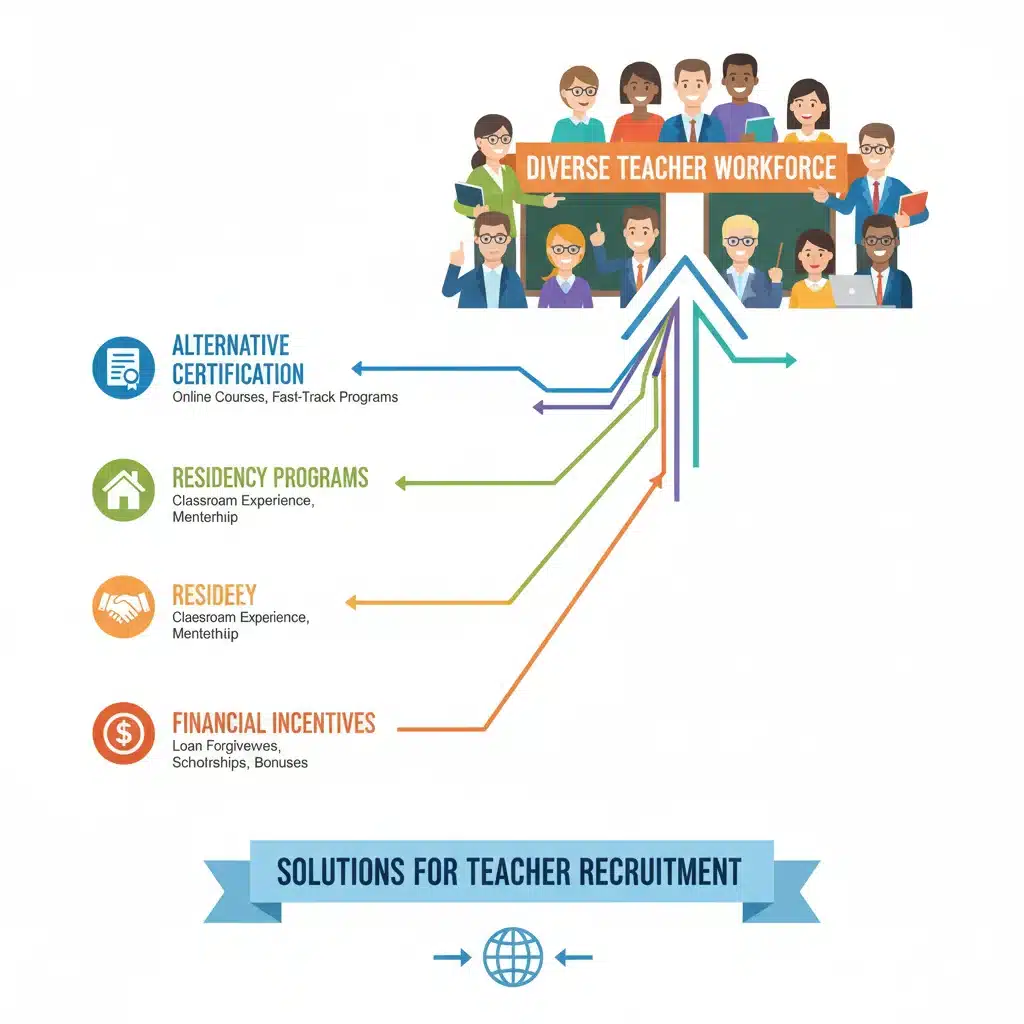
- Apprenticeship and Residency Programs: Modeled after medical residencies, these programs offer aspiring teachers intensive, supervised classroom experience alongside experienced mentors, often combined with graduate-level coursework. This hands-on approach can be highly effective in preparing new teachers for the realities of the classroom.
- Alternative Certification Routes: Streamlining and strengthening alternative certification programs can bring talented professionals from other fields into education. These programs must maintain rigorous standards to ensure quality, but they offer a valuable avenue for career changers.
- Targeted Recruitment Campaigns: Developing sophisticated marketing campaigns that highlight the rewards and impact of teaching, using social media and partnerships with career counselors, can reach a broader and more diverse audience.
Financial Incentives and Support:
The financial burden of becoming a teacher and the relatively lower salaries compared to other professions are significant deterrents. Addressing these issues is paramount for effective teacher shortage solutions.
- Student Loan Forgiveness and Scholarships: Expanding and promoting programs that offer student loan forgiveness for teachers working in high-needs areas or critical subject fields can significantly alleviate financial stress. Targeted scholarships for aspiring teachers are also vital.
- Competitive Salaries: While a complex issue, advocating for increased teacher salaries at state and local levels is crucial. Fair compensation reflects the importance of the profession and can attract and retain top talent.
- Housing Assistance: In high-cost-of-living areas, offering housing subsidies or assistance programs can make teaching a more feasible option for new educators.

Retention Strategies: Keeping Great Teachers in the Classroom
Recruitment is only half the battle; retaining experienced and effective teachers is equally, if not more, important for solving the teacher shortage. High attrition rates indicate systemic issues that need to be addressed. Creating supportive work environments, offering meaningful professional development, and valuing teacher expertise are key components of successful teacher shortage solutions.
Enhancing Professional Development and Support:
Teachers, like all professionals, thrive when they feel supported and have opportunities for growth.
- Robust Mentorship Programs: Pairing new teachers with experienced mentors provides invaluable guidance, reduces feelings of isolation, and improves retention rates. Structured programs with dedicated time for mentorship are most effective.
- Ongoing, Relevant Professional Learning: Moving beyond one-off workshops, schools should invest in sustained, job-embedded professional development that addresses teachers’ specific needs and helps them refine their craft. This includes training in new technologies, differentiated instruction, and socio-emotional learning strategies.
- Collaborative Planning Time: Providing dedicated time for teachers to collaborate with colleagues, share best practices, and plan curriculum can foster a sense of community and improve instructional quality.
- Reduced Workload and Administrative Burdens: Many teachers report being overwhelmed by non-instructional duties. Streamlining administrative tasks and providing adequate support staff can free up teachers to focus on teaching.
Improving Working Conditions and Culture:
A positive school culture and manageable working conditions are powerful motivators for teachers to stay in the profession.
- Empowering Teacher Voice: Involving teachers in decision-making processes regarding curriculum, school policies, and professional development can increase their sense of ownership and satisfaction.
- Promoting Work-Life Balance: Addressing issues like excessive class sizes, extracurricular demands, and limited planning time can significantly improve teacher well-being and reduce burnout.
- Safe and Supportive School Environments: Ensuring that schools are safe, respectful, and inclusive places for both students and staff is fundamental to teacher retention.
- Recognition and Appreciation: Regularly acknowledging and celebrating teachers’ contributions, both formally and informally, can boost morale and reinforce their value.
Leveraging Technology: A Modern Approach to Teacher Shortage Solutions
Technology offers a wealth of opportunities to mitigate the teacher shortage and enhance the teaching profession. From expanding access to quality instruction to streamlining administrative tasks, digital tools can be powerful allies in developing effective teacher shortage solutions by 2026.
Expanding Reach and Flexibility:
- Virtual Teaching and Hybrid Models: For subjects with acute shortages, virtual teachers can provide instruction to students in remote areas or those needing specialized courses. Hybrid models, combining online learning with in-person support, can also offer flexibility for both educators and students.
- AI-Powered Tools for Administrative Tasks: Artificial intelligence can automate grading, attendance tracking, and other administrative duties, freeing up teachers’ time to focus on instruction and student interaction.
- Online Professional Development: Flexible, on-demand online professional development platforms can provide teachers with continuous learning opportunities that fit into their busy schedules, without requiring travel or extensive time away from the classroom.
Enhancing Instruction and Engagement:
- Personalized Learning Platforms: Technology can help teachers differentiate instruction, providing personalized learning paths for students, which can reduce the burden on teachers to create individualized plans from scratch.
- Interactive Learning Resources: Digital tools and platforms can offer engaging and interactive content, making lessons more dynamic and captivating for students, thereby enhancing the teaching experience.
- Data Analytics for Student Support: Leveraging data analytics can help teachers identify student needs more quickly and efficiently, allowing for targeted interventions and support, thus optimizing teacher effort.
It’s important to note that technology should complement, not replace, the human element of teaching. The goal is to empower teachers, make their jobs more manageable, and expand their impact, ultimately contributing to a more sustainable teaching force and robust teacher shortage solutions.
Policy Reforms and Systemic Changes for 2026 and Beyond
Addressing the teacher shortage requires more than just individual school initiatives; it necessitates significant policy reforms at the state and federal levels. These systemic changes can create a more supportive and attractive environment for educators nationwide.
Key Policy Recommendations:
- Increased Funding for Education: A foundational element for any lasting teacher shortage solutions is adequate and equitable funding for public education. This allows for competitive salaries, smaller class sizes, and robust support systems.
- Streamlined Certification and Licensure: While maintaining high standards, states should review and streamline their teacher certification processes to remove unnecessary barriers, especially for out-of-state teachers or those transitioning from other professions. Interstate reciprocity agreements are also crucial.
- Targeted Incentive Programs: Governments can establish and expand incentive programs for teachers willing to work in high-needs subjects or underserved geographic areas, including signing bonuses, housing stipends, and enhanced loan forgiveness.
- Investing in Teacher Preparation Programs: Funding for university-based teacher preparation programs, especially those with strong clinical components and partnerships with local schools, is essential to ensure a steady supply of well-prepared educators.
- Rethinking Teacher Evaluation Systems: Moving away from punitive evaluation systems towards models that emphasize growth, professional development, and constructive feedback can foster a more positive and supportive environment for teachers.
- Advocacy for the Profession: Policy leaders and community stakeholders must actively champion the teaching profession, highlighting its vital role in society and advocating for policies that elevate its status and attractiveness.
These policy changes, enacted thoughtfully and with input from educators themselves, can create a powerful framework for overcoming the teacher shortage and building a resilient educational system for the future. By 2026, the cumulative effect of these reforms could significantly alter the trajectory of the crisis.
The Role of Community and Stakeholder Engagement
Solving the teacher shortage is not solely the responsibility of policymakers and school administrators; it requires a collective effort from the entire community. Engaging parents, local businesses, and community organizations can provide invaluable support and contribute to sustainable teacher shortage solutions.
Building a Culture of Support for Educators:
- Parental Involvement: Encouraging active and positive parental involvement in schools can create a more supportive learning environment and foster greater respect for teachers.
- Business Partnerships: Local businesses can offer internships for aspiring teachers, sponsor professional development, or provide discounts and perks for educators, demonstrating community appreciation.
- Community Advocacy: Community leaders and organizations can advocate for increased funding for schools and policies that support teachers, helping to shape public opinion and political will.
- Mentorship from Community Members: Retired professionals or community experts can volunteer as mentors or guest speakers, enriching the educational experience and providing additional support to teachers.
- Public Awareness Campaigns: Launching campaigns that highlight the importance of teaching and the positive impact of educators can help to restore prestige to the profession and encourage more individuals to consider it as a career.
When communities rally around their schools and teachers, it creates a powerful ecosystem of support that can significantly improve teacher morale, reduce burnout, and make teaching a more desirable profession. This collective responsibility is crucial for achieving our goals by 2026.
Looking Ahead: A Vision for 2026 and Beyond
The challenge of teacher shortage is formidable, but it is not insurmountable. By implementing a combination of innovative recruitment strategies, robust retention efforts, strategic technological integration, comprehensive policy reforms, and widespread community engagement, we can effectively address this crisis. The vision for 2026 is one where every classroom in the United States is staffed by a highly qualified, passionate, and supported educator. This requires a paradigm shift in how we view and value the teaching profession.
Imagine a future where teaching is seen as a highly respected, well-compensated, and professionally fulfilling career. A future where diverse individuals are eager to enter the classroom, bringing a wealth of experience and perspectives. A future where ongoing professional growth is standard, and collaboration is embedded in the school culture. This future is within reach, but it demands commitment, investment, and a collective will to prioritize education.
The innovative teacher shortage solutions discussed in this article – from ‘grow your own’ programs and teacher residencies to competitive salaries, AI-powered tools, and supportive policy frameworks – are not isolated ideas. They are interconnected components of a holistic strategy. Their successful implementation will require collaboration among federal, state, and local governments, educational institutions, community organizations, and individual citizens. By working together, we can ensure that the United States has the dedicated and talented teaching workforce it needs to educate the next generation and secure a brighter future for all.
The time for action is now. Let us commit to building an educational system that not only recognizes the critical role of teachers but actively invests in their success and well-being. The future of American education, and indeed the nation, depends on it.